



Step right into the Halloween Game Room, where a little friendly competition is always part of the party! This corner of Halloween Headquarters is filled with games that get everyone tossing, shooting, matching, aiming, and laughing, and you don’t need expensive rentals or complicated equipment to join the fun.
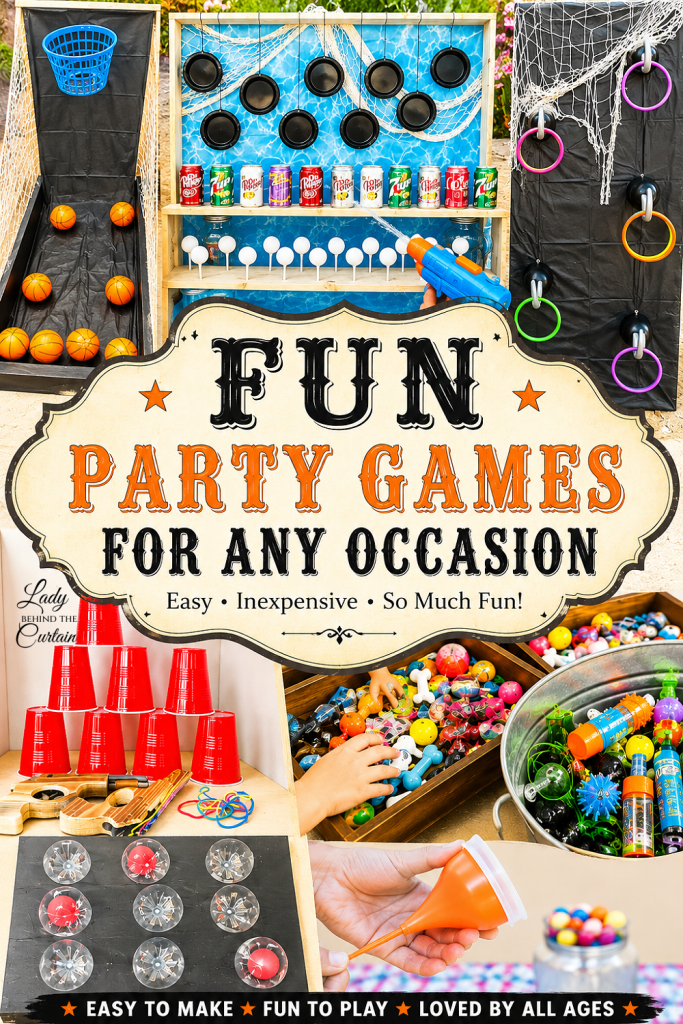
Over the years, I’ve created all kinds of homemade party games using everything from dollar-store finds and scrap wood to empty soda bottles and supplies left over from other projects. Some were originally designed for Halloween parties, while others started with completely different celebrations. What they all have in common is a simple idea that can be played again and again.
And that’s the best part about this collection. These may have found a home in the Halloween Game Room, but they don’t have to stay here. Change the colors, decorations, or targets and the same games can entertain guests at birthday parties, family reunions, backyard barbecues, school carnivals, summer celebrations, and more. So while you’re visiting Halloween Headquarters, gather a few ideas for October and tuck them away for all the other celebrations still to come.
Start With a Great Game and Let the Theme Follow
When you’re creating a party game, think about how it will be played before thinking about how it will be decorated.
A basket doesn’t need to look like anything special to create a great shooting game. A row of targets doesn’t need an elaborate theme to be satisfying to knock down. Once you’ve figured out the action-shooting, tossing, matching, aiming, or racing against the clock-you can make the finished game fit almost any celebration.
My homemade Hoop Shot Game is a perfect example. I used a basket and mini basketballs from Dollar Tree along with inexpensive black plastic tablecloths and decorative netting I found in the luau section. Those very ordinary supplies came together to create a game that works much like an expensive arcade basketball game.
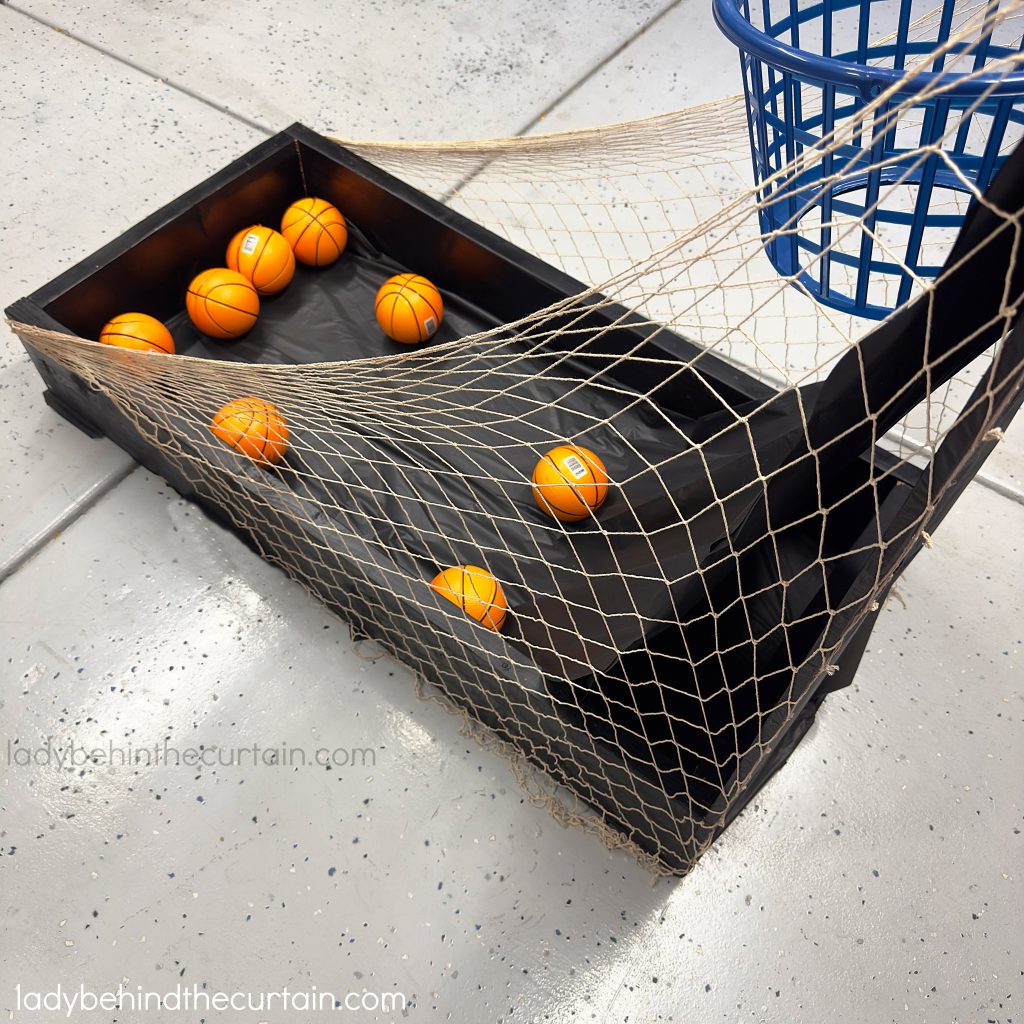
The sloped playing area sends the mini basketballs rolling back toward the player, so the action keeps going rather than stopping every time someone takes a shot. That’s the important part of the design. The decorations make it look fun, but the ball return is what makes it play like an arcade game.
Once you have a game that works well, you can bring it out again for another celebration. Instead of rebuilding the entire thing, give it a different look and let it become part of a completely new party.
Raid the Dollar Store, Garage and Recycling Bin
Before buying supplies for homemade games, take a look at what you already have.
Scrap lumber, empty containers, plastic cups, soda bottles, leftover spray paint, buckets, trays, party decorations, and odds and ends from previous celebrations can become surprisingly useful game-building materials. Once you stop looking at these things for what they are and start looking at what they could be, game possibilities seem to be everywhere.
My Tic-Tac-Toe Game was created with scrap wood, empty 2-liter bottles, and leftover spray paint. Nothing about those supplies sounds particularly exciting on its own, but together they became a colorful oversized version of a game everyone already knows how to play.
Dollar stores are another great place to hunt for supplies, but don’t limit yourself to the party aisle. Walk through the seasonal, toy, household, sports, and decorating sections looking at shapes and materials rather than the purpose printed on the package.
That’s exactly how netting from a luau section ended up becoming part of a completely different game.
The goal isn’t necessarily to find something labeled “party game.” A basket might become a hoop. A plastic plate might become a target. A golf tee might become the perfect little stand for a ping pong ball. Sometimes the best game supplies are hiding in plain sight.
Behind the Curtain Tip: Shop for the shape and function of an item rather than its intended purpose. Once you start doing that, inexpensive stores become treasure hunts for party-game supplies.
Give Players Something Satisfying to Hit
There’s a reason carnival games are filled with things to knock down. Hitting a target provides an immediate little victory.
My Shooting Gallery takes that idea one step further by giving players several different things to shoot. Instead of expensive equipment, powerful squirt guns provide the action. The gallery includes hanging plates, empty soda cans, and ping pong balls balanced on golf tees.
What makes the setup especially entertaining is that every target reacts differently.
A hanging plate swings. An empty can tumbles over. A ping pong ball flies from its tee.
That reaction matters. Players don’t have to wonder whether they hit the target; they can see what happened.
It’s also an easy way to build multiple levels of difficulty into one game. A larger target gives younger players something they can realistically hit, while a small ping-pong ball perched on a golf tee creates a much greater challenge for older kids and adults.
Distance gives you another way to adjust difficulty without rebuilding anything. Move younger children closer to the targets and create another shooting line farther back for older players. Everyone gets to play the same game, but the challenge can be tailored to the player.
You can even assign different point values to targets to encourage a little strategy. Suddenly players have a choice: go after the easier target or risk the shot for more points.
Add a Clock and Watch a Simple Activity Become a Competition
Sometimes the difference between an activity and a party game is nothing more than a timer.
The Match Game is a perfect example. A tray is filled with an assortment of small objects, and every item has a matching mate hidden somewhere in the mix. The goal is simple: find all the pairs before time runs out.
Without the clock, guests could casually sort through the objects until everything was paired. Once those seconds start ticking away, the entire experience changes.
Now players are searching, remembering, grabbing, second-guessing themselves, and desperately looking for the mate to something they swear they saw ten seconds ago.
That’s why a timer is such a useful tool when you’re creating homemade games. You don’t necessarily need to change the activity itself. You’re simply giving players a clear finish line.
Scoring can do the same thing. Give everyone the same number of attempts and count successful shots, or award points based on difficulty. You can even keep a party-wide scoreboard and see whether anyone can beat the highest score before the celebration ends.
For younger children, skip the pressure and let them enjoy the activity at their own pace. Older kids and adults may be more than happy to turn it into a serious competition.
Funny how quickly “I’m just watching the kids” can turn into “Wait—I get one more try.”
Design Games That Make Everyone Say, “One More Turn!”
A homemade game doesn’t need complicated rules to keep guests entertained. In fact, simple challenges often have the greatest replay value.
The trick is finding that sweet spot between possible and guaranteed.
If a game is so easy that everyone succeeds immediately, there’s not much reason to play again. If it’s so difficult that nobody ever succeeds, players may give up. Somewhere in between is the magic.
A basketball that rolls around the rim before bouncing out makes you want another shot. A target that almost falls makes you certain you’ll get it next time. Finishing the Match Game just a few seconds too late practically demands another attempt.
Those near misses are part of the fun because players can immediately imagine themselves doing better.
Keep individual turns fairly short, too. A game that takes only a minute or two allows guests to jump in without feeling committed to a long activity. Short turns also keep the line moving and make it easy for someone to come back later for another chance.
For party games, “almost!” can sometimes be just as entertaining as “I did it!”
Bigger Can Make a Familiar Game Feel Brand New
You don’t always need to invent a new game. Sometimes changing the scale is enough to completely change the experience.
Think about tic tac toe. On paper, it’s a tiny game played with a pencil. Build a larger version, and suddenly players are picking up pieces, moving around the board, and physically placing their choices. The rules haven’t changed at all, but the experience has.
Oversizing familiar games is especially useful for parties because larger pieces are easier for a group to see. People standing nearby can follow what’s happening, which turns spectators into part of the action. Before long, someone on the sidelines is cheering, offering advice, or waiting to challenge the winner.
Larger games also have more visual presence. Instead of disappearing on a tabletop, they become part of the party environment.
So before searching for an entirely new game idea, look at games everyone already knows. Ask yourself what would happen if you made one bigger, took it off the table, or turned a normally quiet activity into something guests could physically interact with.
Sometimes the fresh idea isn’t a new game at all; it’s a new way to play an old favorite.
Build a Game Lineup With Something for Everyone
When several games are being offered at the same party, variety matters more than quantity.
You don’t need six different versions of throwing a ball at something. Instead, combine challenges that use different skills.
A shooting game rewards aim. Hoop Shot gets players moving and encourages quick repeated shots. The Match Game relies on observation, memory, and speed. Tic-Tac-Toe brings strategy into the mix. Tossing and target-style games test coordination.
That variety gives different guests an opportunity to find the game that suits them.
The child who can’t make a basket may be lightning fast at finding matching objects. Someone who doesn’t care about a timed challenge may love trying to hit a tiny target. Another guest may happily spend half the party trying to improve the same score.
This is particularly helpful when you’re entertaining a mixed-age group. Instead of expecting every game to appeal equally to everyone, create a collection with different types of challenges.
Guests will naturally gravitate toward their favorites.
Let the Games Become Part of the Party Scene
A large homemade game can do more than entertain guests; it can help fill the party space.
This is where inexpensive decorating materials really earn their keep. A plain structure made from scrap wood or cardboard doesn’t have to look impressive underneath. Once it’s covered, surrounded, or accented with the same decorative elements used throughout the party, it becomes part of the overall setting.
Think of the game area almost like another party display.
Different heights, large game boards, hanging targets, baskets, netting, and rows of colorful pieces add dimension to a space. Instead of filling an empty corner with decorations guests can only look at, you can fill it with something they can actually use.
For a Halloween party, black backgrounds and creepy netting can create the feeling of an old carnival game booth. At a colorful birthday party, the same structure can become bright and playful. A backyard celebration can keep everything casual and simple.
The important difference here is that you’re not decorating the game merely to make it pretty. You’re allowing the game setup itself to become part of the party decor.
That’s especially valuable when you’re working with a limited decorating budget. One project can provide visual impact and entertainment at the same time.
Make Room for a Little Friendly Competition
Not every party needs organized entertainment from beginning to end. In fact, some of the best game areas are the ones guests can wander into whenever they feel like playing.
Set everything up before the party, make the objective obvious, and let the games invite people in.
You can offer small prizes if that suits the occasion, but they’re certainly not required. Sometimes bragging rights are more than enough—especially once a high score has been established.
A simple chalkboard or sign can keep track of the fastest time, most baskets, or highest score. Suddenly guests aren’t only playing the game; they’re trying to knock someone’s name off the top of the board.
For children’s parties, small prizes can add another layer of excitement. Stickers, pencils, candy, novelty toys, or other inexpensive favors can double as game prizes rather than simply being handed out at the end of the celebration.
The goal is to create opportunities for interaction without making the party feel overly scheduled. Guests can play when they want, move on when they’re ready, and come back later when they’re convinced they can beat that score.
Let the Games Begin
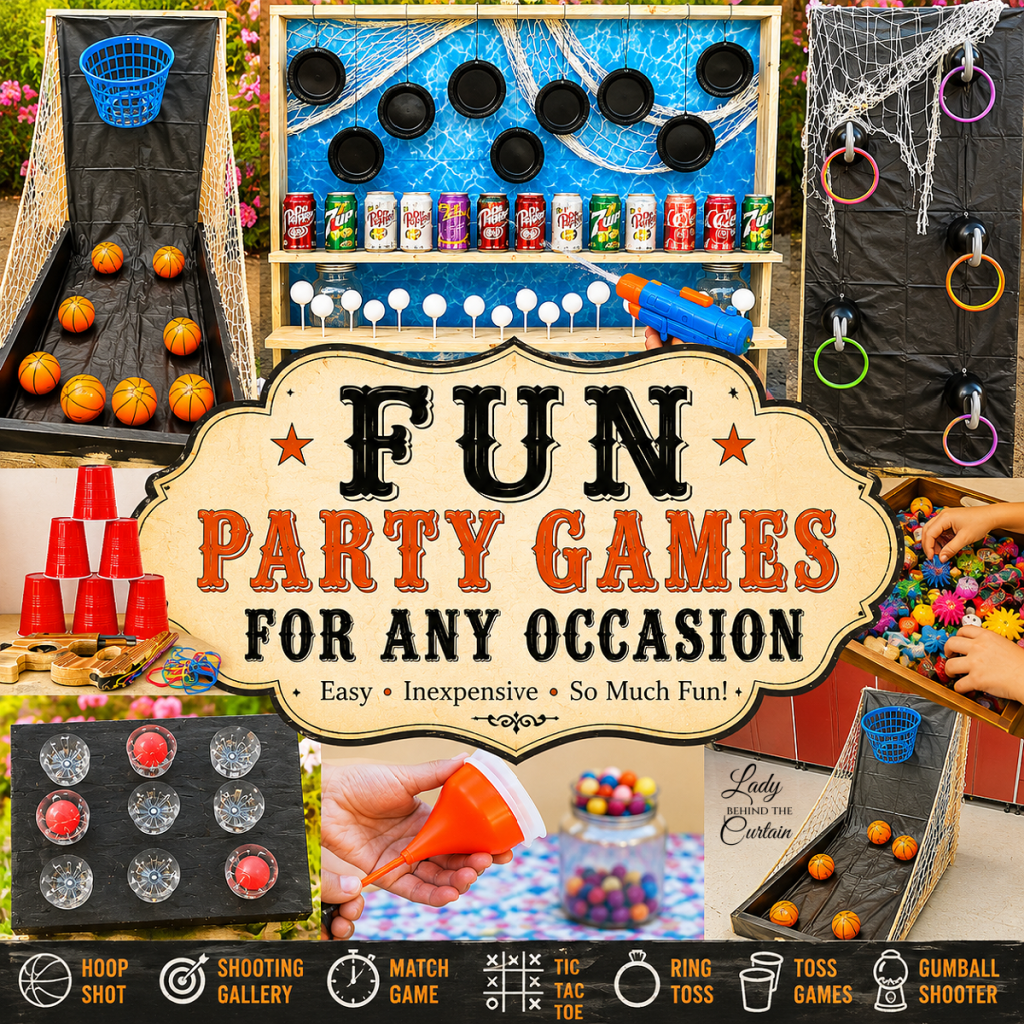
The best homemade party games aren’t necessarily the most elaborate ones. They’re the games that make people stop what they’re doing and say, “I want to try that.”
That’s why it’s worth looking beyond expensive party entertainment and thinking creatively about the materials around you. A simple basket can inspire an arcade-style challenge. A collection of everyday objects can become a race against the clock. Scrap materials can turn a familiar game into something large enough for the whole party to enjoy.
Most importantly, create games that invite people to participate.
You want guests gathered around cheering when someone finally knocks down the difficult target. You want kids racing back to the end of the line because they’re determined to try again. You want someone proudly holding onto the high score while everyone else tries to beat it.
Those are the moments people remember.
And that’s what makes Fun Party Games for Any Occasion such a great addition to a celebration. The supplies may be simple, and the rules may be easy, but once the games begin, they have a wonderful way of bringing the whole party together.
Homemade Hoop Shot Gam
This Dollar Tree-inspired game is super easy to put together. If you have kids who love playing the hoop game at the arcade, pizza parlor, or carnival, they’ll love this DIY Basketball Hoop Shot Game. NOTE: I MADE THIS GAME FROM PLYWOOD; IT CAN ALSO BE MADE USING STURDY CARDBOARD. Making your own game is much more affordable than purchasing one for $300.00! The game is great for kids and adults! The game is designed so the balls will automatically return to the player, allowing them to keep making hoops until time runs out. For little kids, the game can be played at ground level; for older kids and adults, it should be placed on a table. The person with the most hoops in the allotted time WINS!
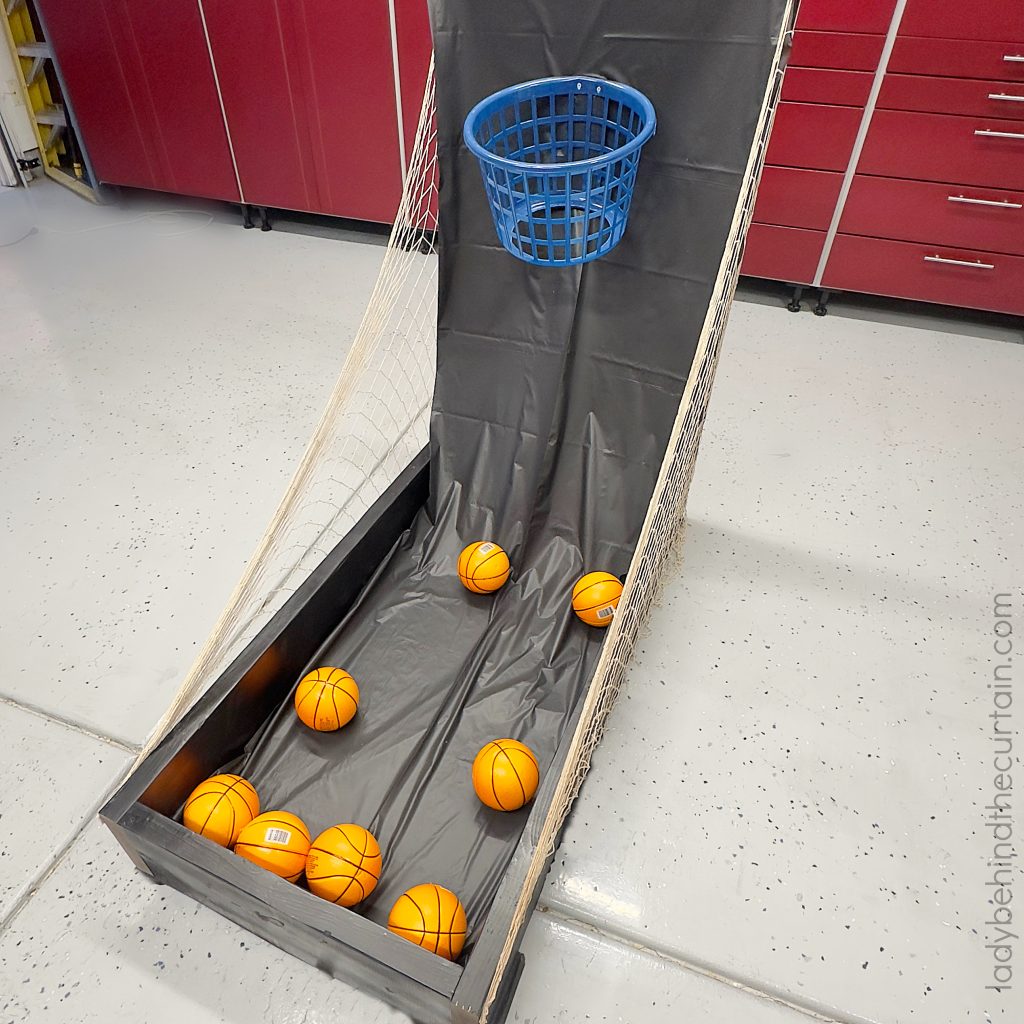
HOOP SHOT GAME SUPPLIES
- 2 (2′ x 4′) pieces of plywood or sturdy cardboard (I used plywood)
- 1 (2″ x 8″) piece of wood (we shopped the clearance cart at Home Depot-the wood will have a purple painted line
- screws to make frame and attach basket
- black spray paint
- staple gun for netting
- 1 black plastic tablecloth from Dollar Tree or Walmart
- 1 basket (12¾ inches wide at the top x 10 inches at the bottom x 9 inches tall) from Dollar Tree
- 8 small 4.5-inch foam-rubber basketballs from Dollar Tree
- 2 (6′ x 8′) fishing nets from Dollar Tree (found with the Luau stuff)
HOOP SHOT GAME INSTRUCTIONS
- Cut the 2″ x 8″ piece of wood into 4 pieces to fit as a frame around the bottom 2′ x 4′ piece of plywood.
- Screw the four pieces of cut wood together, fit around the bottom piece of plywood, screw together, and paint.
- Attach the remaining piece of plywood to the back of the frame.
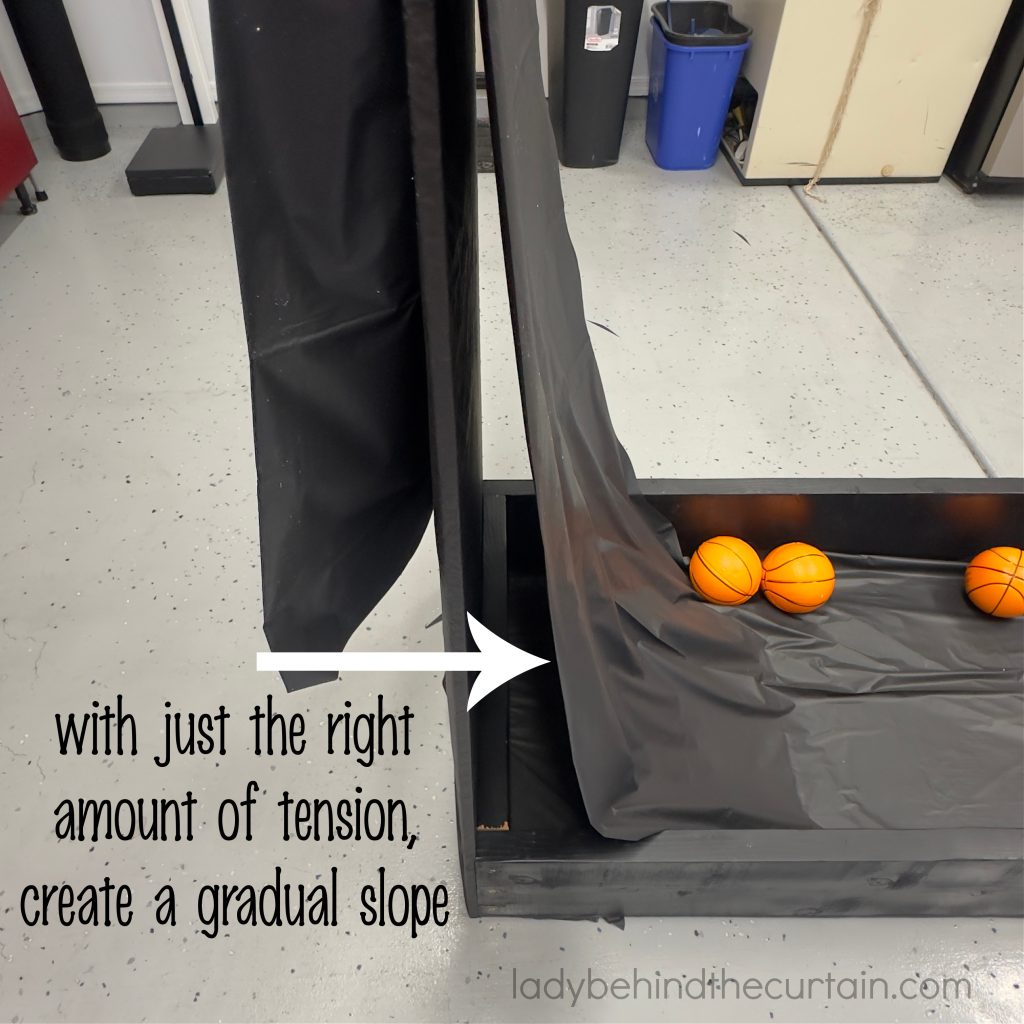
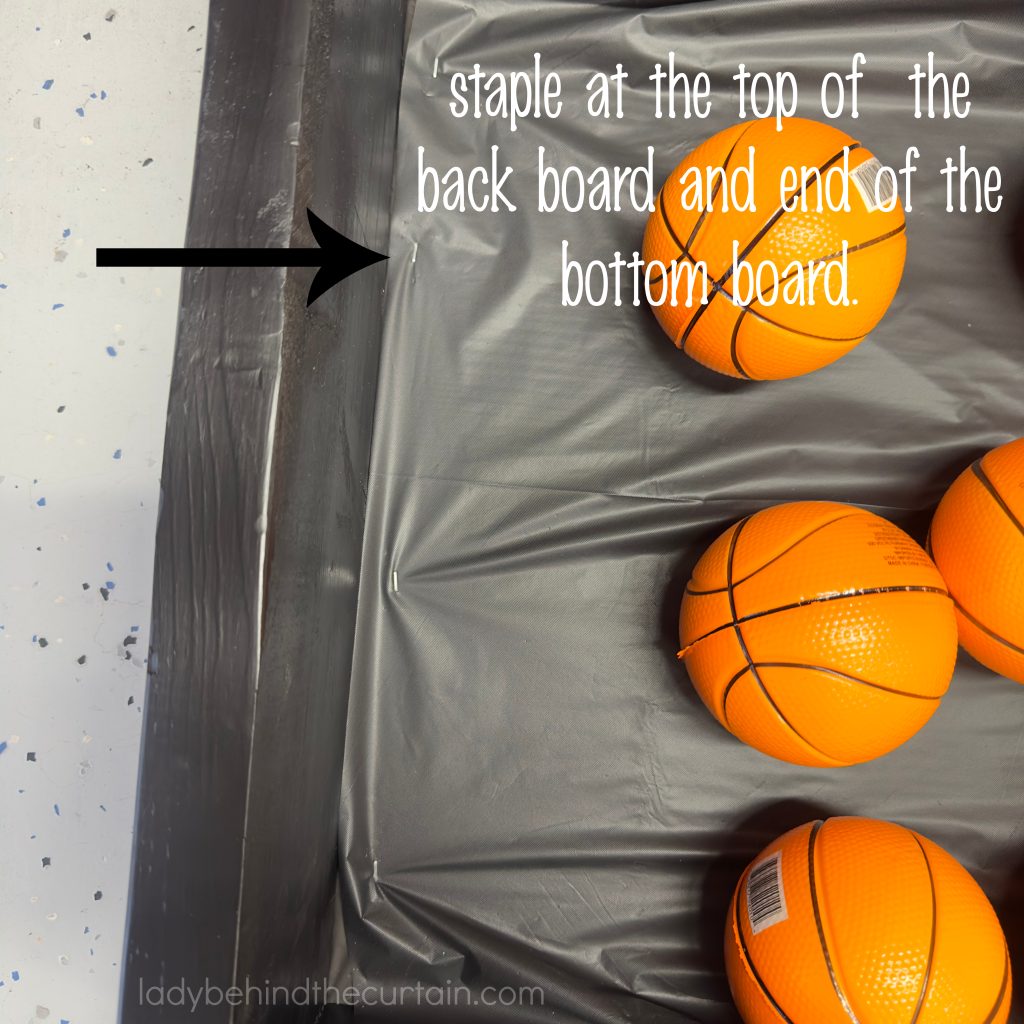
- Open the tablecloth only enough to keep it folded in half lengthwise. Drape the tablecloth over the backboard, carefully pulling to the bottom front, and staple to the bottom piece of plywood.
- At the top of the backboard, adjust the drape of the tablecloth so the balls will roll back to the player and not bounce out.
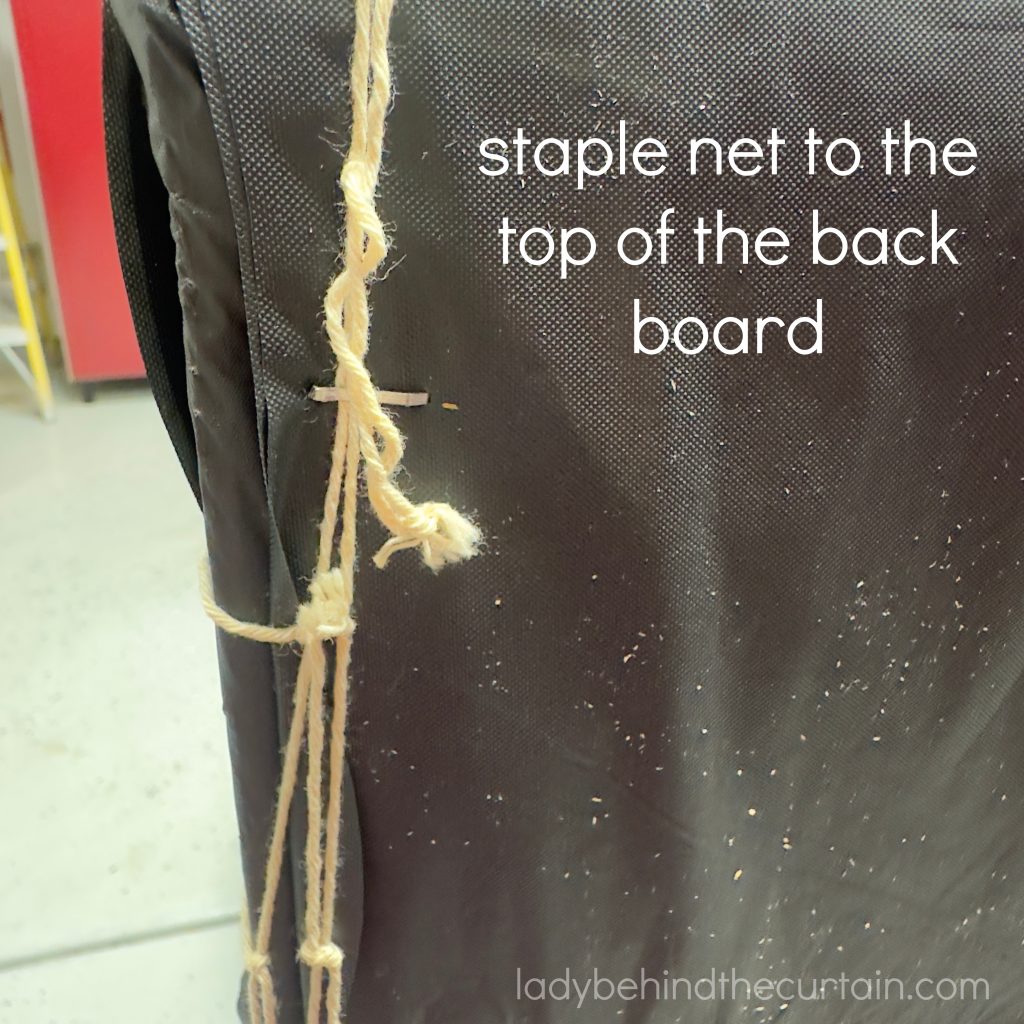
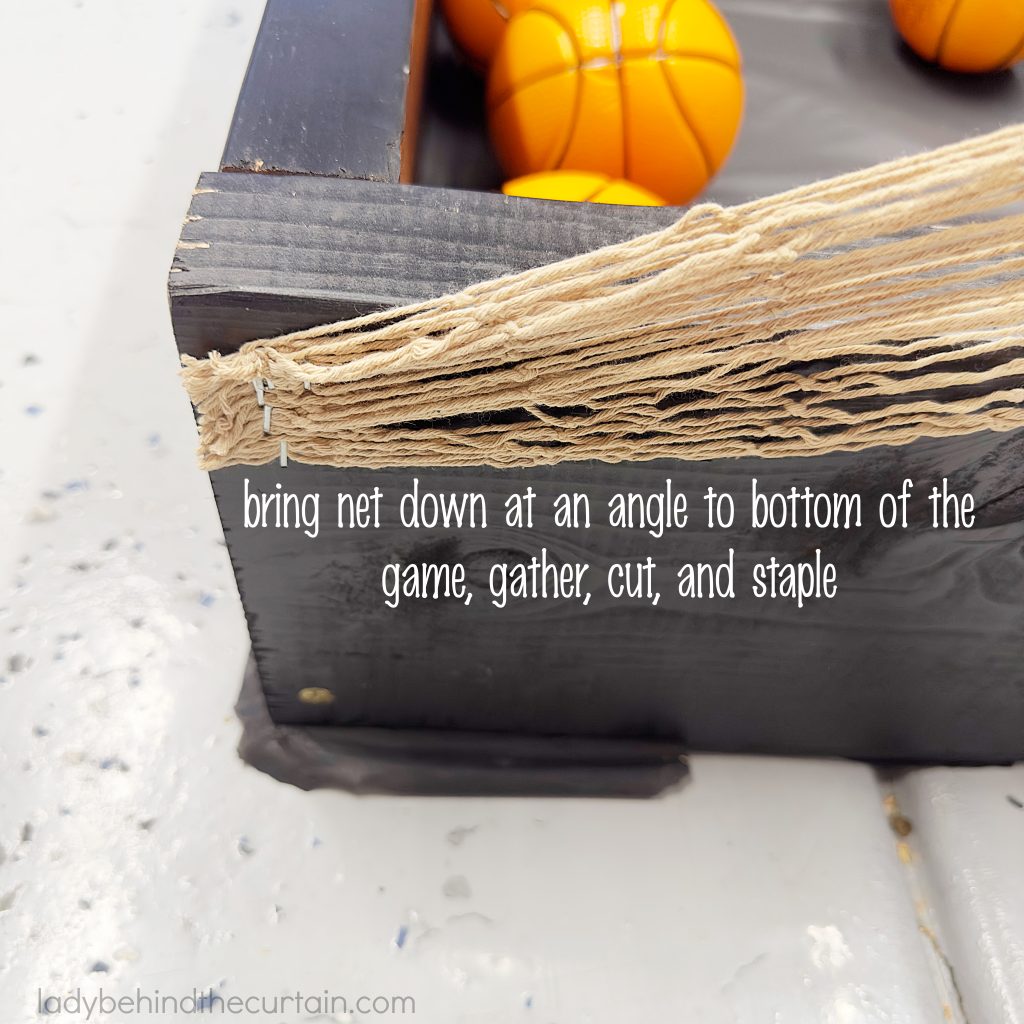
- Expand one of the nets, using the smallest side (6 feet). Staple the top to one side of the backboard, pulling the net tight; staple down the back.
- Bring the net together down the same side and staple at the end of the frame. Repeat for the other side.
- If your basket has a handle, remove it.
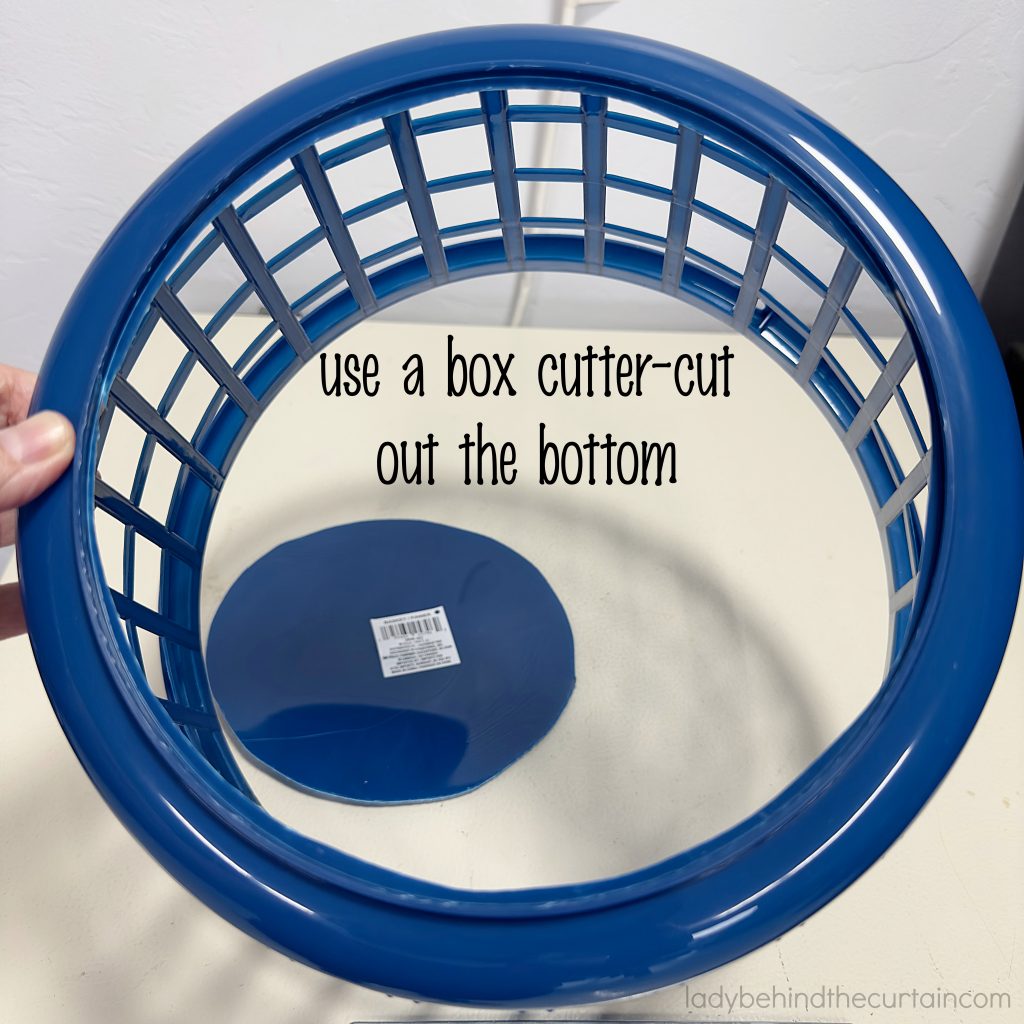
- Use a box cutter to remove the bottom of the basket.
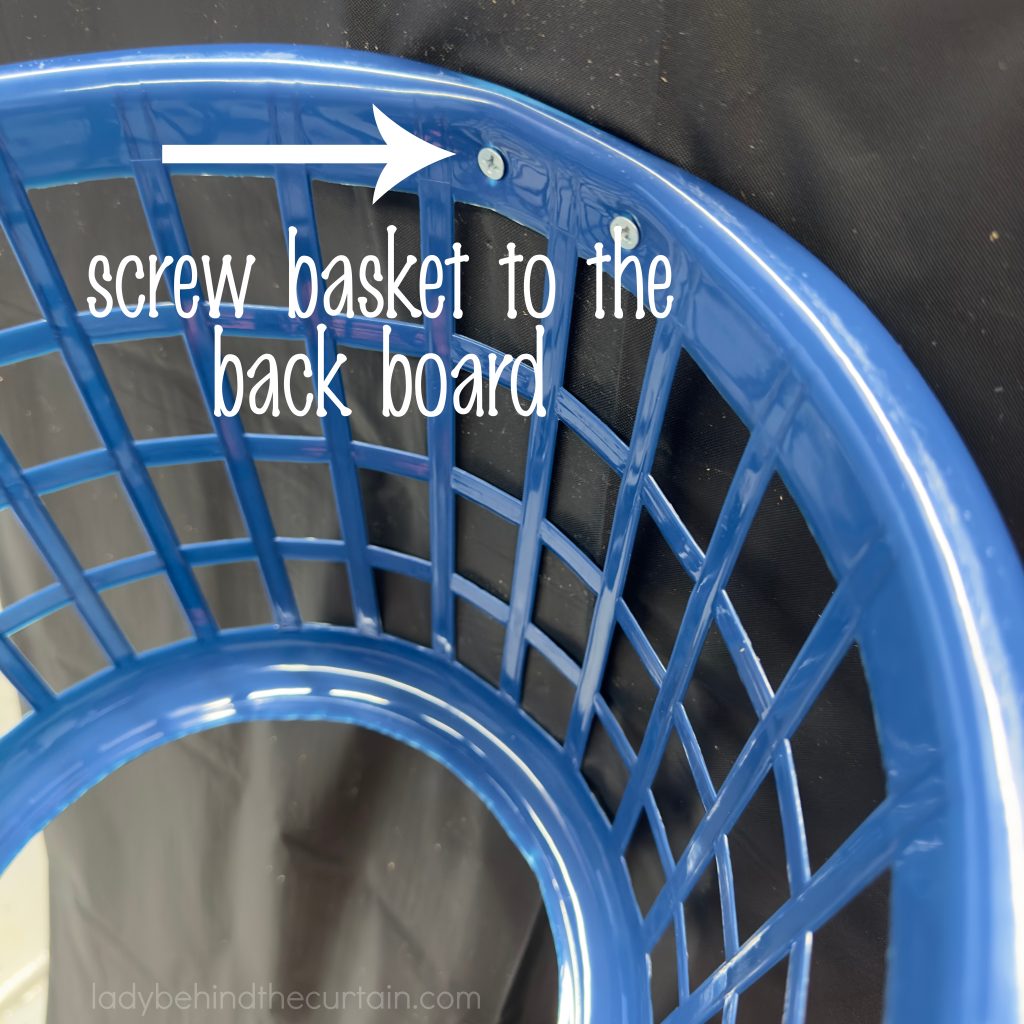
- Screw the basket to the backdrop, widest side up.
Party Shooting Gallery
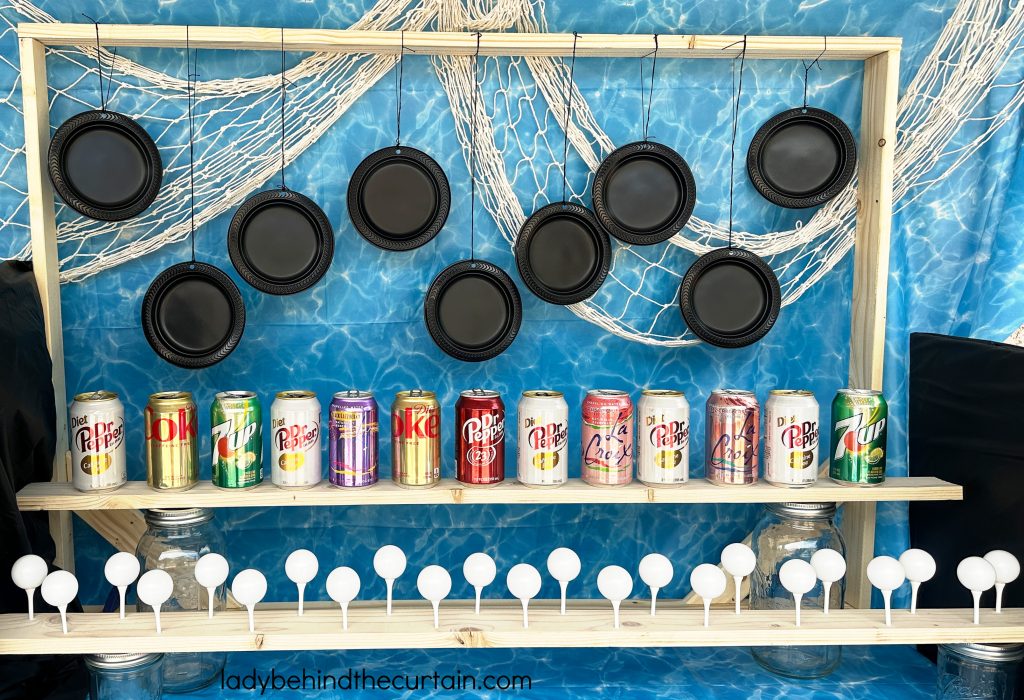
The kids absolutely LOVED this activity. The shooting gallery has three levels with three different items to shoot. You will need someone manning the station so the gallery can be quickly set up after a guest has played.
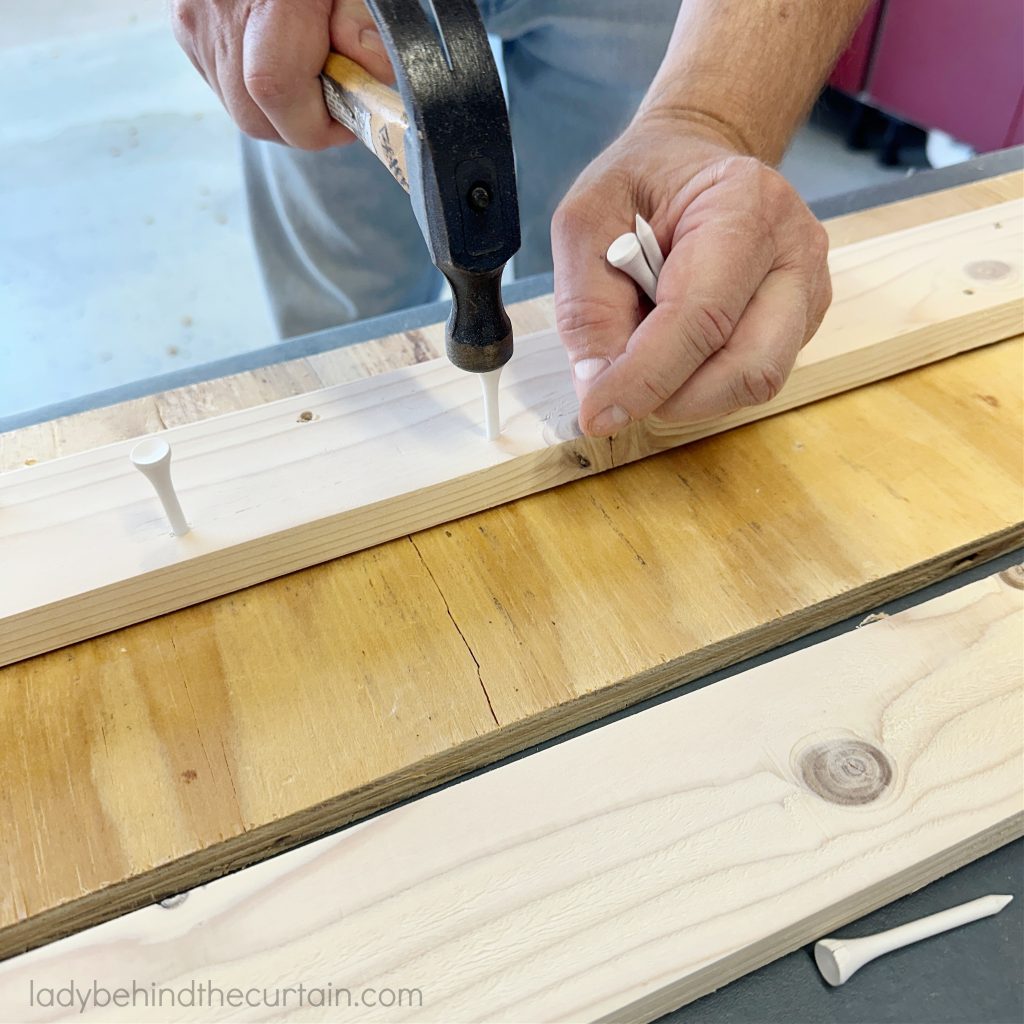
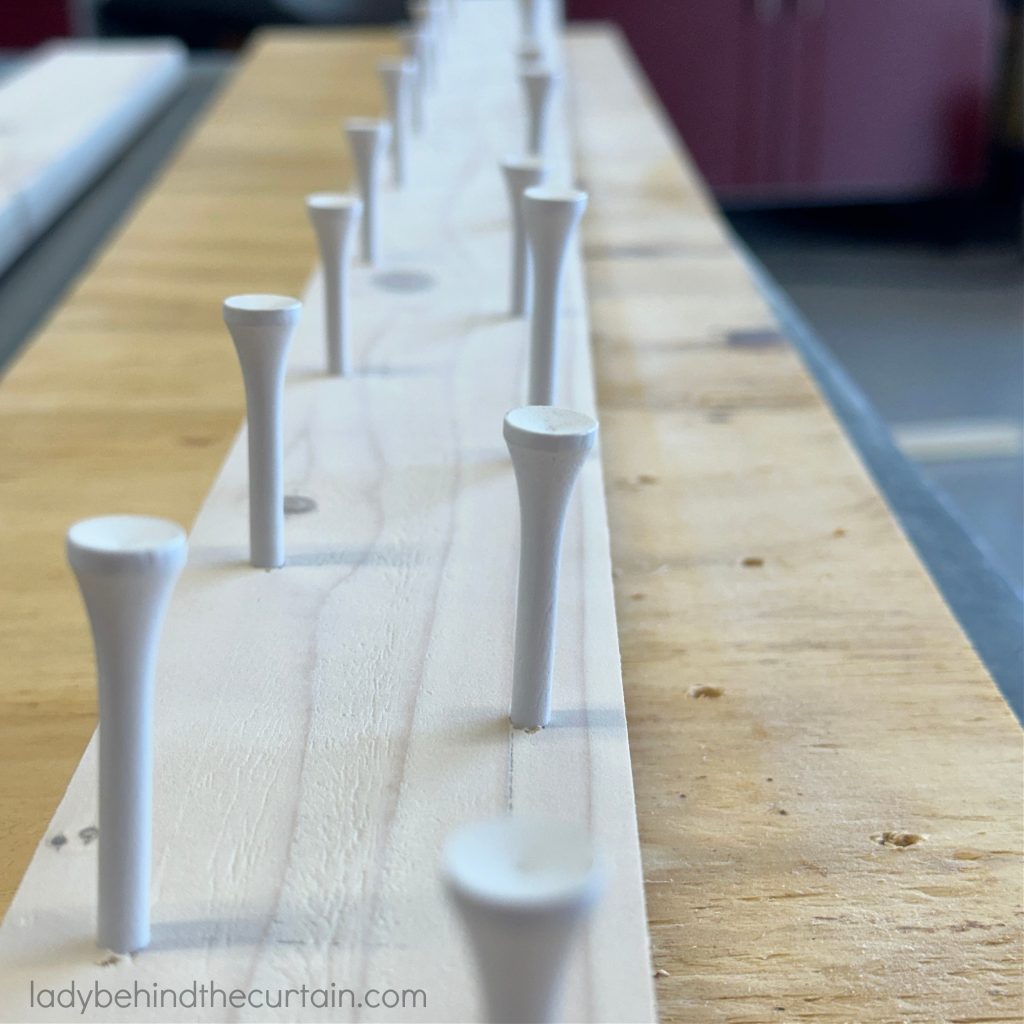
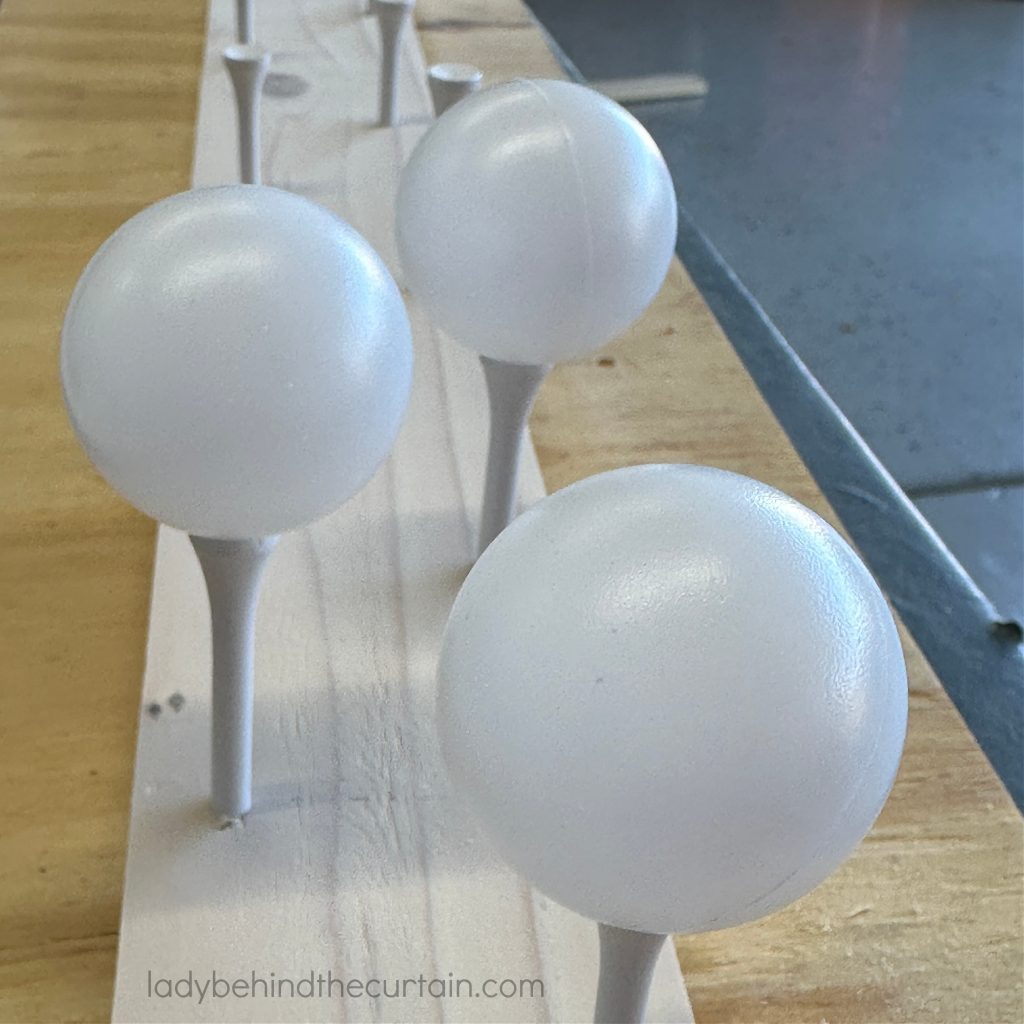
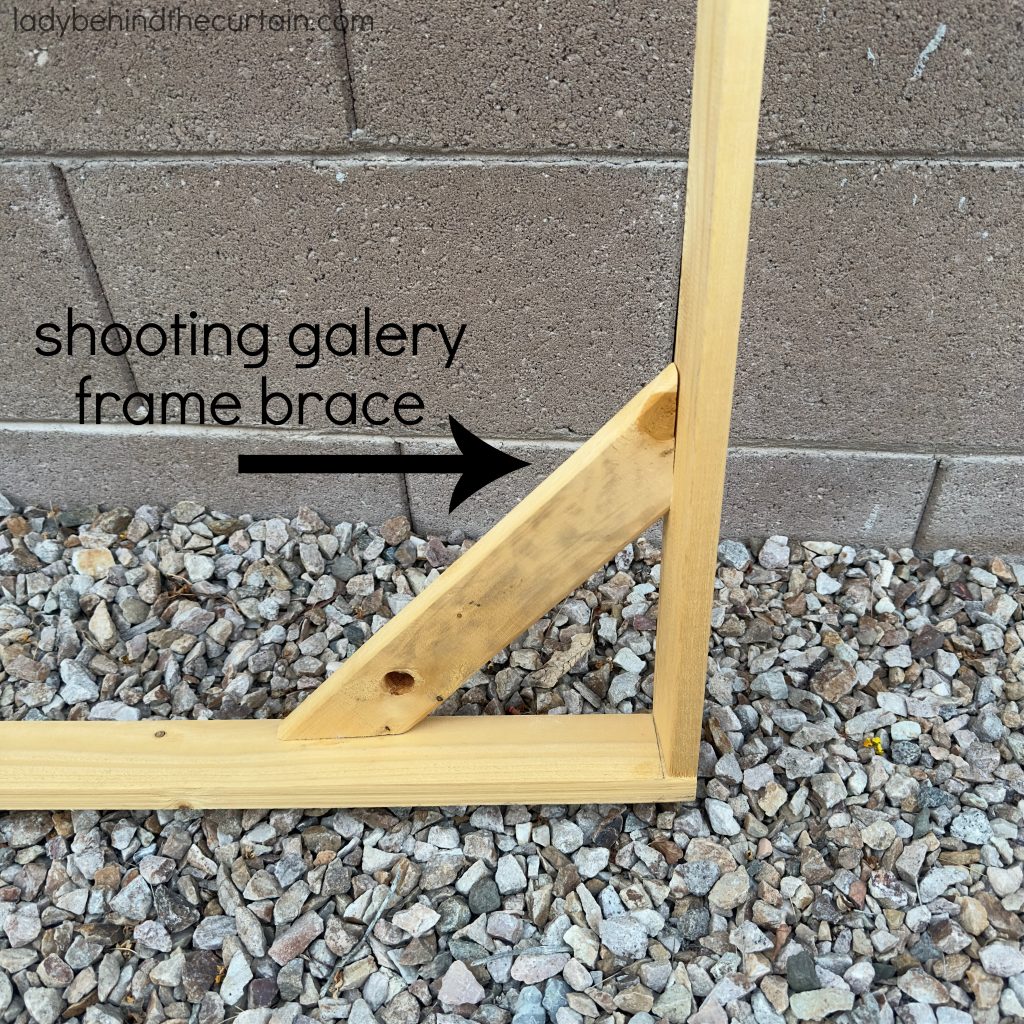
PARTY SHOOTING GALLERY SUPPLIES
- 6 (6-foot) 1×3-inch boards
- 1 (6-foot) table
- 23 golf tees
- 23 ping pong balls
- 13 empty soda cans
- 9 dessert-size plastic plates
- string (I used black crochet string)
- 2 squirter guns (water squirter from Dollar Tree)
- bucket large enough to hold water (note: a water squirter does not need to be submerged to gather water, unlike a traditional squirt gun, and fills up rather quickly)
- screws
- drill
- measuring tape
- Optional chop saw
DIY SHOOTING GALLERY DIRECTIONS– below are instructions on how I made the shooting gallery. Use them all or make some of my suggestions and add some of your own.
- DESSERT PLATE SECTION: Build a frame from the 1×3’s for the hanging plates. The frame measures 3 feet tall by 4 feet wide. Add wooden braces to the two bottom sides of the frame. NOTE: The frame will stand on its own, but adding anything heavier than plates might cause the frame to fall.
- Punch holes in the tops of each plate, tie string through the hole and around the top of the frame. Space out the plates so they can freely move.
- SODA CAN SECTION: Use something to elevate a 4-foot piece of a 1×3 to fit under the hanging plates. I used a tall mason jar. Place as many cans as you wish ( I used 13).
- PING PONG BALL SECTION: Drill 23 holes, staggering down a 4-foot piece of a 1×3. Make sure the holes are slightly smaller than the golf tees. They should fit snug enough that they need to be hammered into the holes. NOTE: Try to drill the holes as straight down as possible. The tees have scooped out tops, which makes them a little forgiving and can handle a little tilting. Place the piece of wood on something to elevate it lower than the can section. I used a smaller mason jar.
- WATER BUCKET: Fill the bucket with water, add squirt guns to the water, and let the kids go!
Ring Toss Game
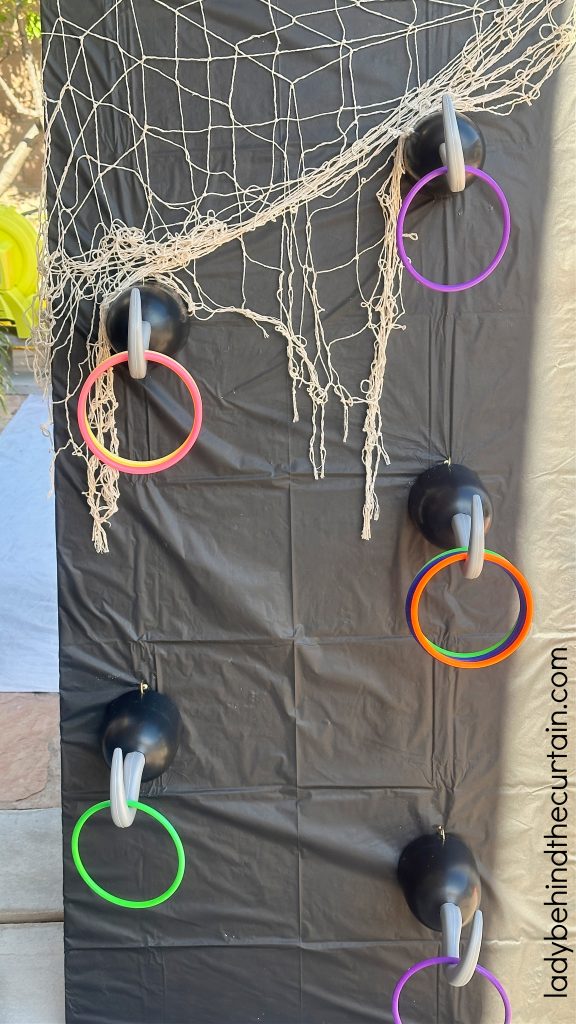
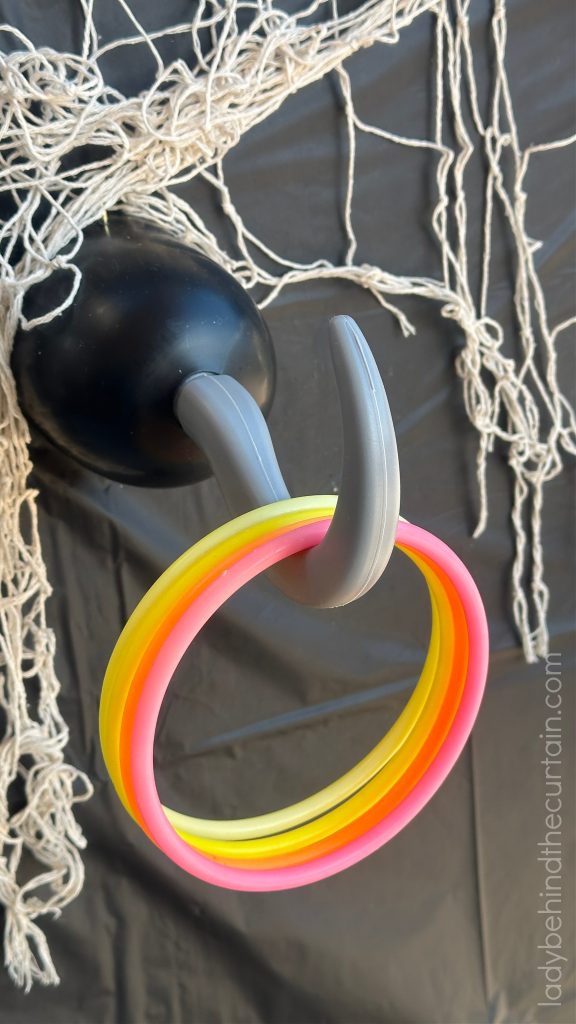
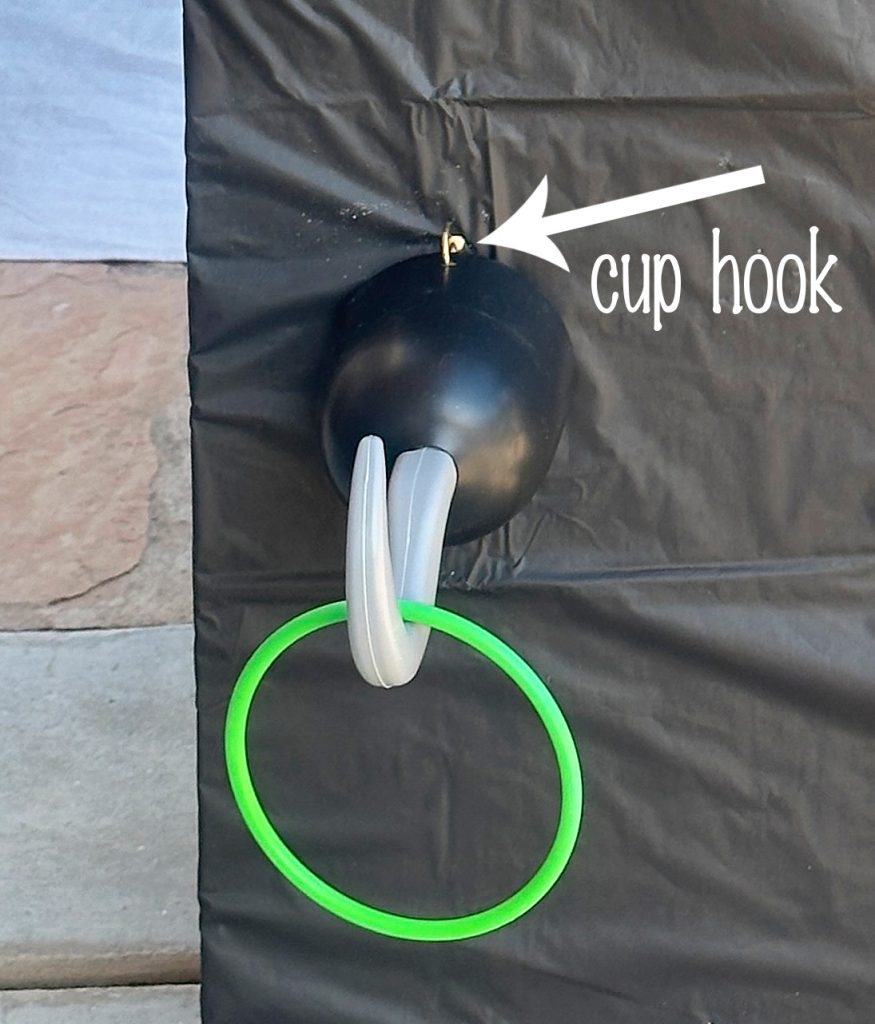
This game can be enjoyed by all ages, even adults. All that’s needed is to adjust the distance from where the tosser stands. The further away, the harder the game. Littles can simply place the ring on the hook! For the hooks, you can order them off of Amazon or keep a close watch out for them at Dollar Tree.
RING TOSS GAME SUPPLIES
- piece of plywood or sturdy cardboard
- black paint or cheap black tablecloth
- staple gun (for the tablecloth)
- cup hooks
- pirate hooks
- rings
- optional fishing net from Dollar Tree
RING TOSS INSTRUCTIONS
- A piece of plywood or sturdy piece of cardboard will work for this game. You can paint the board or cover it with a cheap tablecloth and secure it with a staple gun.
- Work out where you want the pirate hooks before adding the cup hooks. Then add the cup hooks
- Drill a hole in the pirate hooks, hook on hooks, and toss away!
Match Game
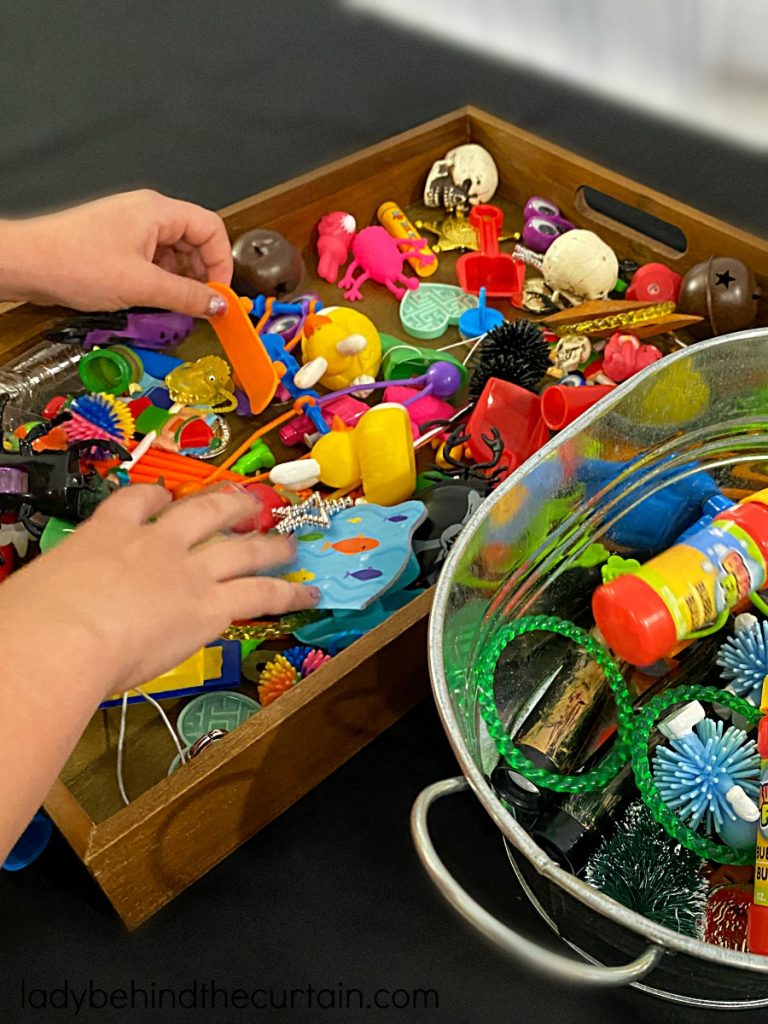
This fun game is super easy to put together.
- Choose a flat surface with edges (I used a serving tray) for the toys or items to fall into.
- Get a container large enough to hold all the toys or items.
- Collect toys or items from your house or the dollar store ( the amount is up to you), two of the exact same per toy or item.
- HOW TO PLAY:
- Pour all the toys and items into the tray
- Set the timer for 1 minute (the time is totally up to you)
- The goal is to see how many matches the child can make in one minute.
- As they make a match, the toys or items can be thrown into the container they were originally in.
Eyeball Toss
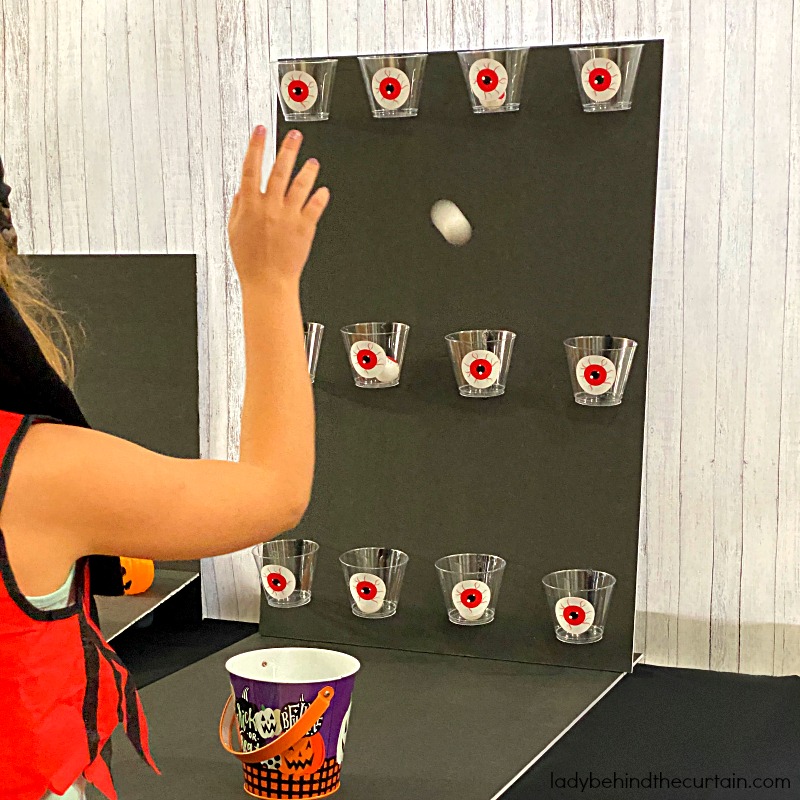
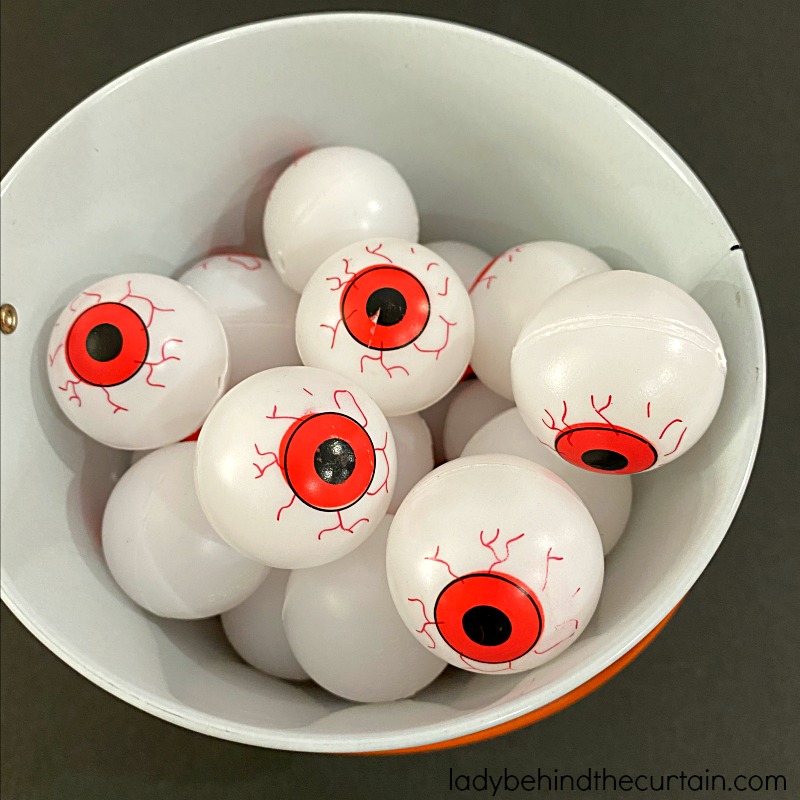
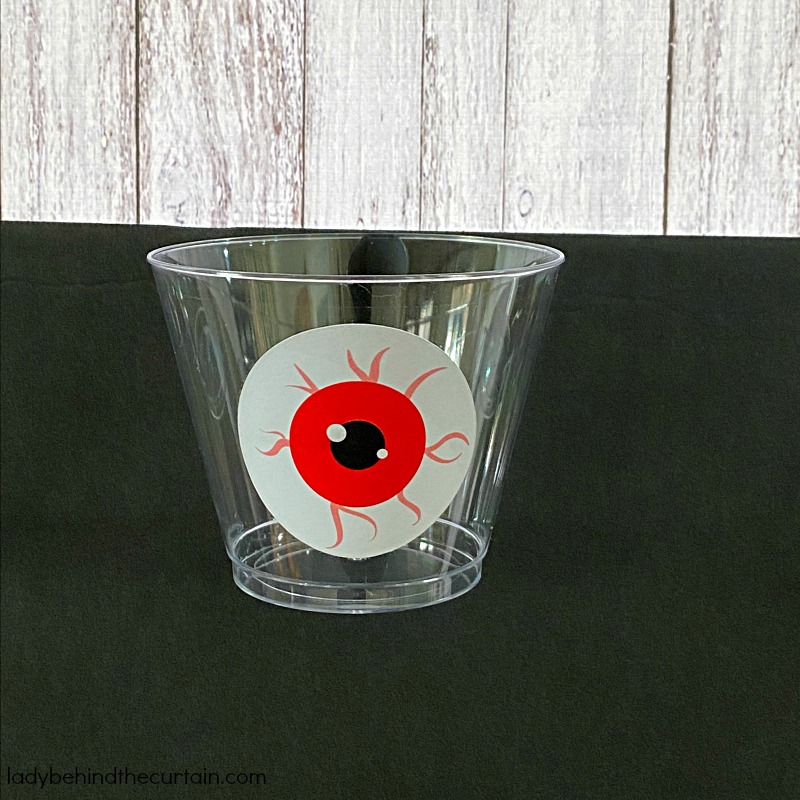
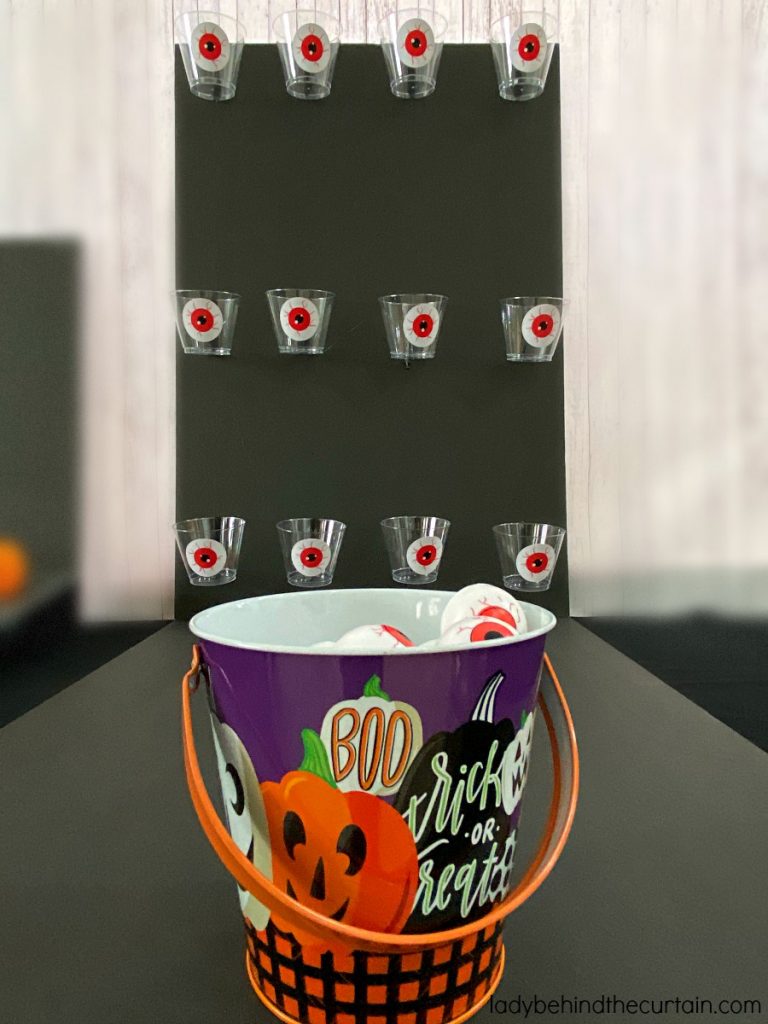
Creepy bloodshot eyeballs attached to punch cups and a foam backdrop make this Halloween Party Game not only fun but also affordable. Scroll down for a FREE eyeball download. All items for this game were purchased at Dollar Tree.
- SUPPLIES:
- foam board
- 8-ounce plastic tumbler (2¾ inches tall); the amount is up to you (I used 12).
- Bloodshot eyeball ping pong balls (found in the Halloween section at Dollar Tree)
- Low-Temp glue gun
- Tape ( for eyeballs)
- HOW TO MAKE:
- Attach eyes to the front of each cup
- Attach cups (with a low-temp glue gun) across the top, middle, and bottom of the foam board
- HOW TO PLAY:
- There are so many ways this game can be played. Mostly it depends on the players’ ages.
- You could add a time limit….how many balls can be sunk in a certain amount of time.
- Standing away or up close to the table



CLICK HERE FOR YOUR FREE DOWNLOAD→ RED EYEBALL, GREEN EYEBALL OR BLUE EYEBALL
Halloween Calming Find It Game
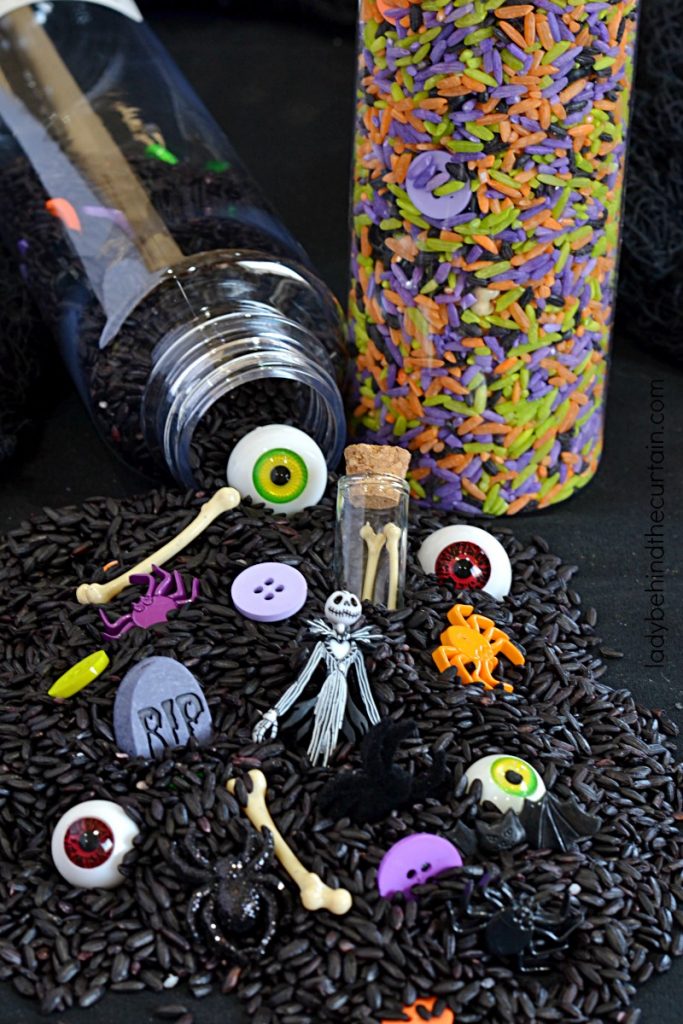
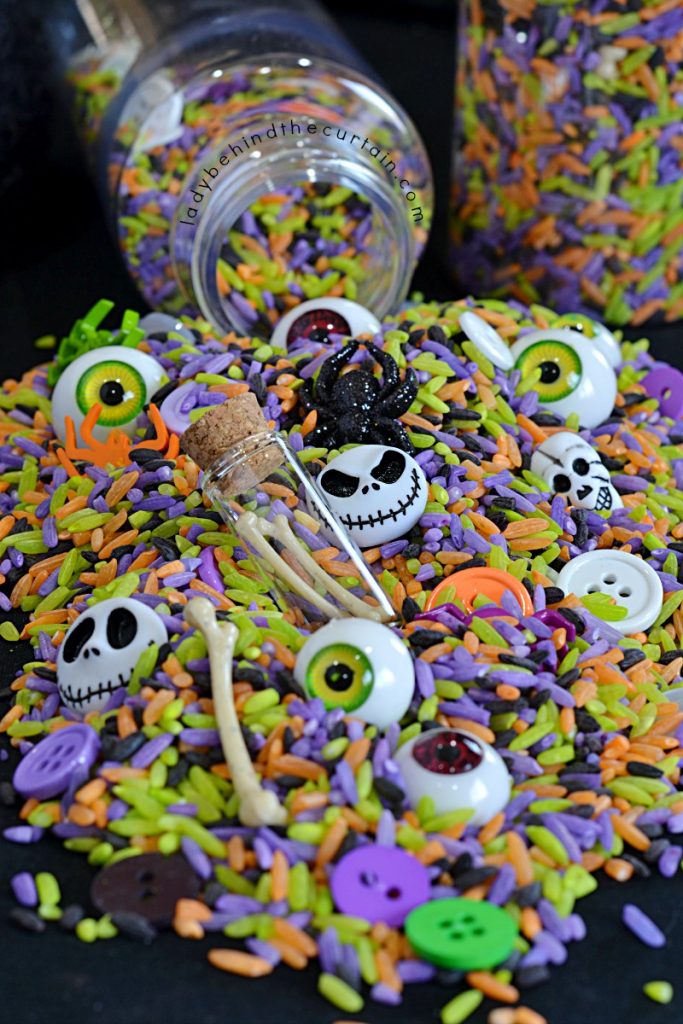
There are so many uses for this Halloween Calming Find It Game. Place a small version of a sensory bottle at each kid’s place setting at a Halloween Party. It’s a great way to keep them busy while they wait for their food at a restaurant. Pack them up and hand them out as party favors. Their moms will love you! CLICK HERE FOR ALL THE INFO → HOW TO MAKE A HALLOWEEN CALMING FIND IT GAME
Carnival Tic Tac Toe Game
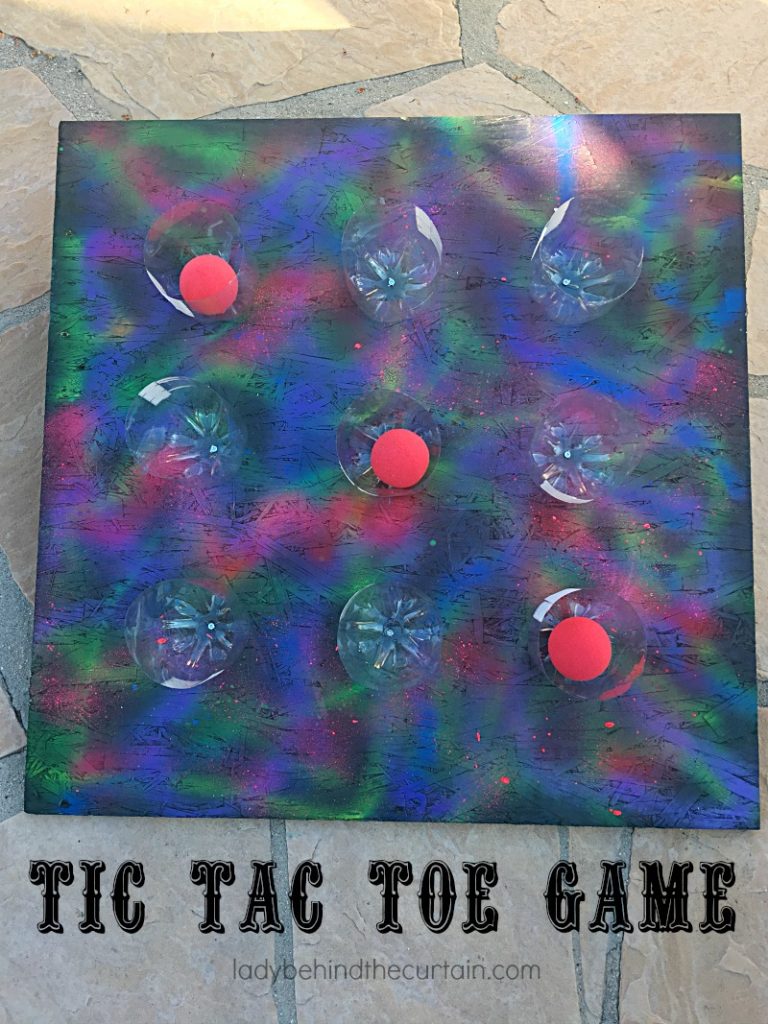
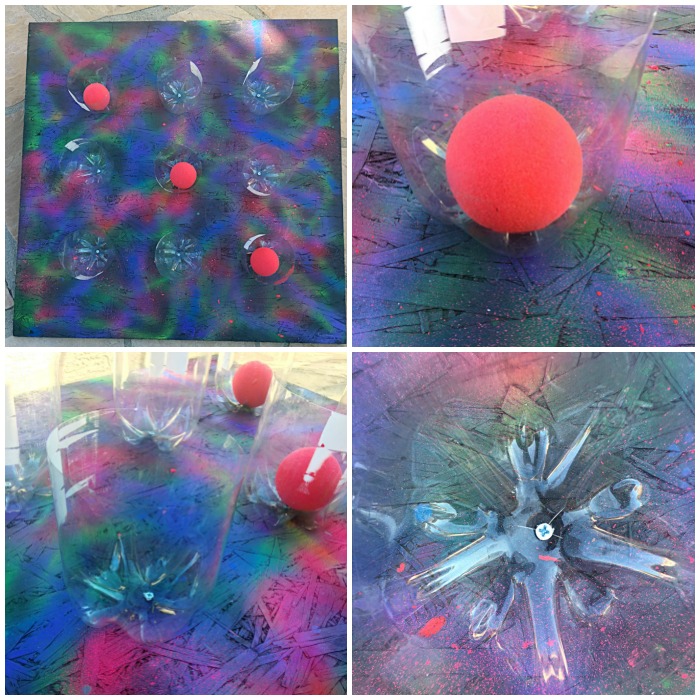
A scrap piece of plywood, some cut-off-2-liter bottles, and you have a game! Again, I used leftover spray paint and screwed the bottom of the bottles to the plywood. Click here for the balls I used—->>>>COLORFUL SPONGE BALLS.
Simple paint job: Spray the board with black spray paint. Then use up any leftover cans of spray paint you have to make dots, swirls, and splatter effects.
Cut the bottle about 6 inches from the bottom using a box cutter and scissors ( remove labels; you can scrub the glue off or leave it).
Screw bottles to the board.
RULES: These rules are just a suggestion. The player gets 9 balls. One point or ticket for any ball that lands in a bottle. Fifteen points or tickets for a tic tac toe (within the first five balls).
Carnival Shooting Game
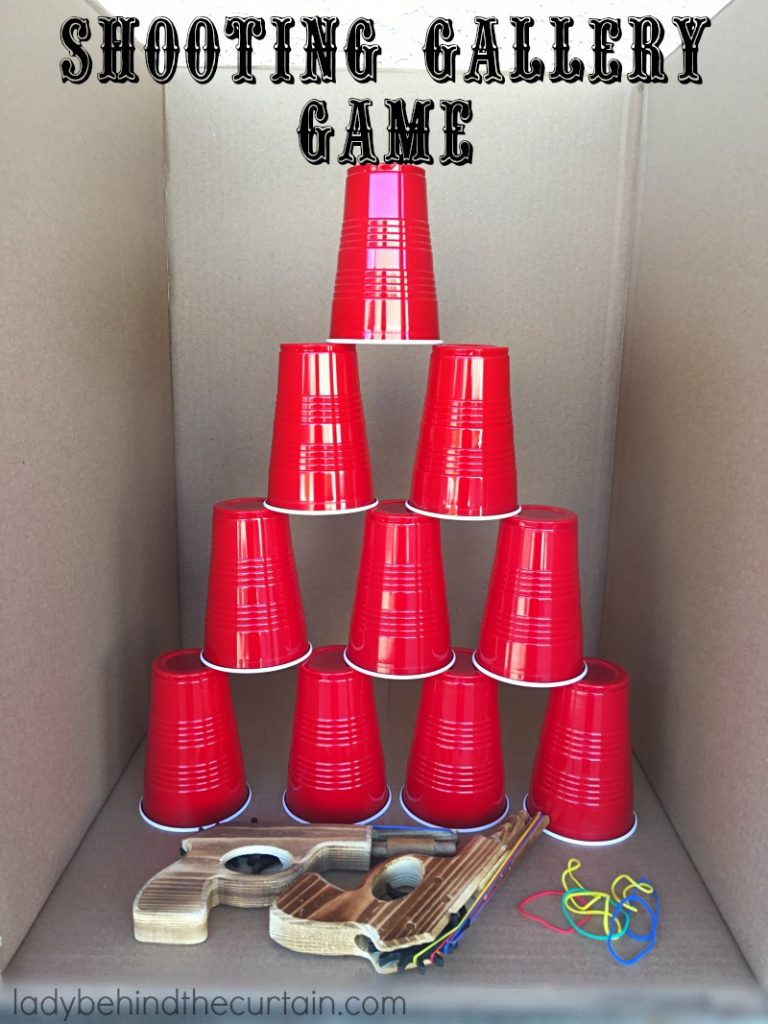
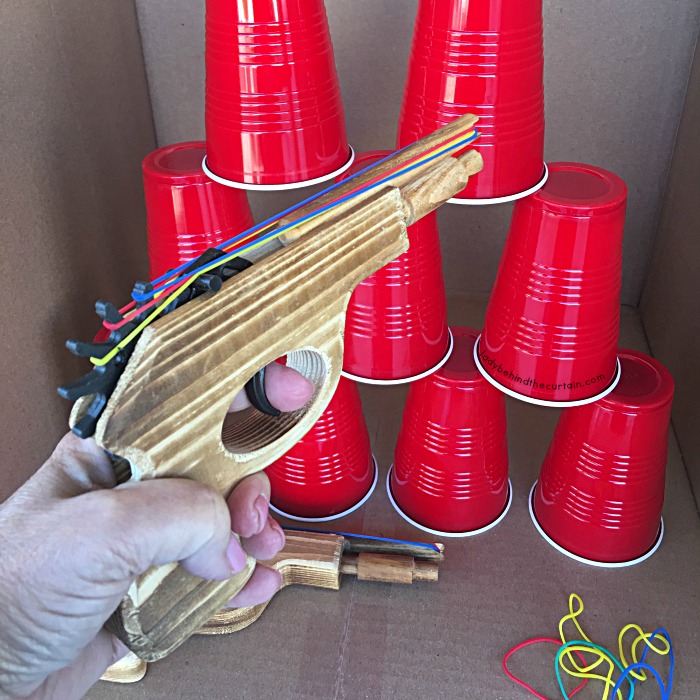
This game is so much fun. I created it for my 8-and 6-year-old granddaughters. Originally, they had to shoot the rubber bands with their fingers. It proved to be too hard for them to master, so I added guns! Solo cups and rubber bands! Simple and classic! You can find the rubber-band-shooting guns on Amazon. The guns come with rubber bands but not enough…..I found the perfect ones at Dollar Tree. The same colors and size!
RULES: These rules are just a suggestion. The player gets 5 tries. One point or ticket per fallen cup.
Carnival Ring Toss Game
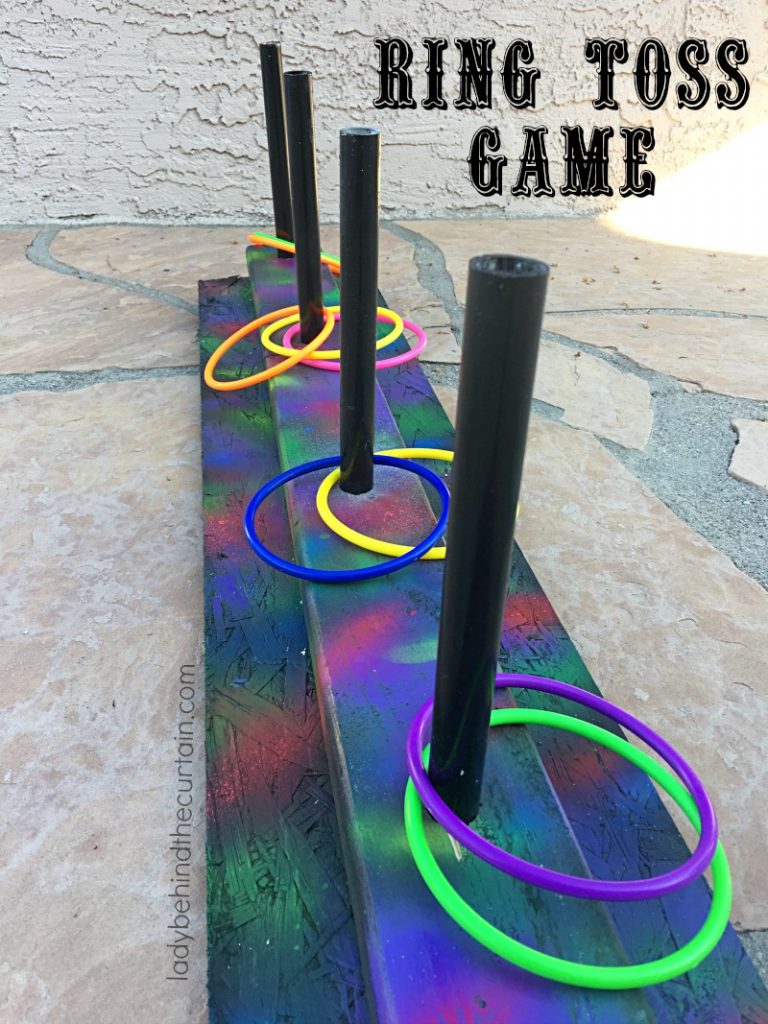
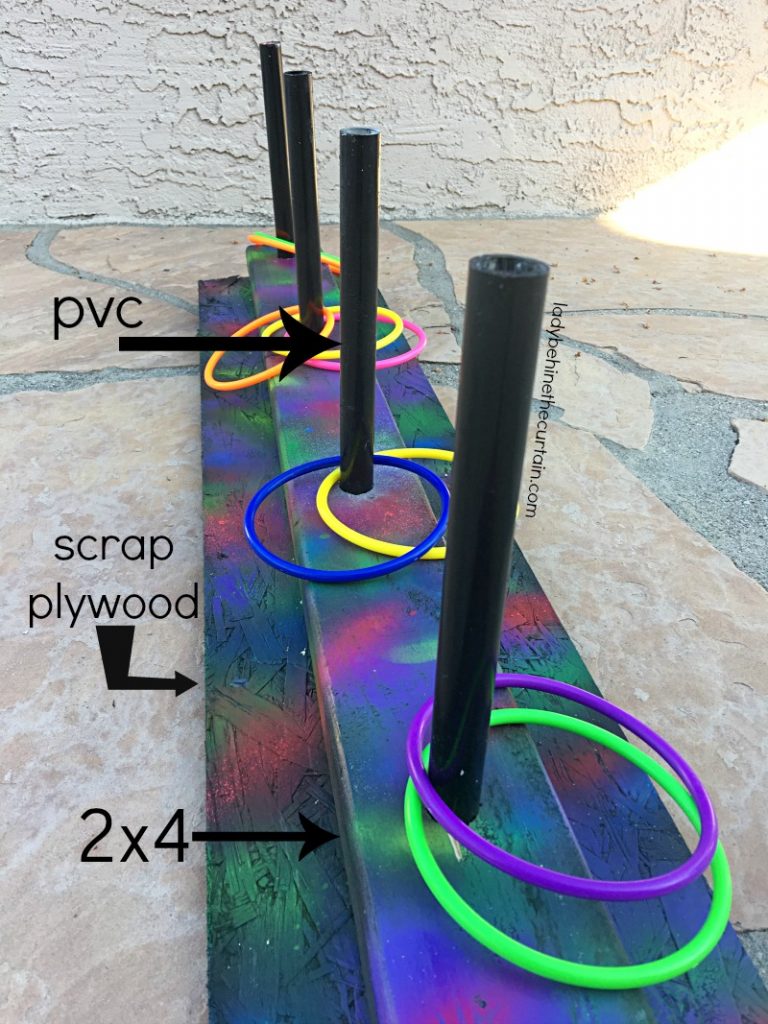
This game can be made with scrap wood. I used a 2×4 and PVC pipe to create this easy, fun game. I also used leftover spray paint. For easy storage, nothing is glued, or since it was made with scraps, you can toss it without feeling guilty. Click here for the rings—->>>>PLASTIC MULTI COLOR TOSS RINGS.
RULES: These rules are just a suggestion. There are 5 posts. The player gets 12 tries (it’s harder than it looks). The first three posts are worth 1 point or ticket; the fourth post is worth 3 points or tickets, and the fifth post is worth 5 points or tickets.
Gumball Shooter Competition Game
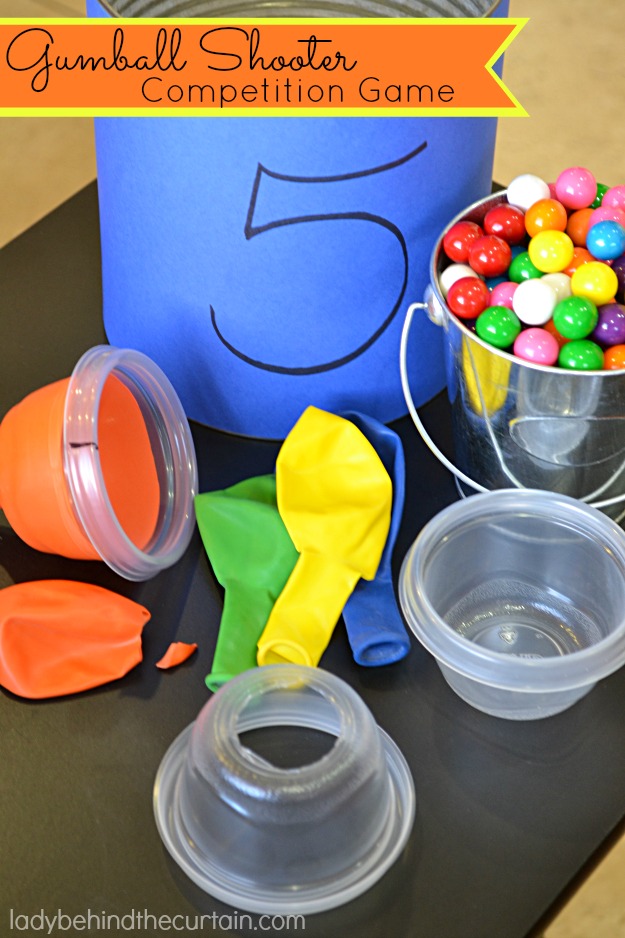
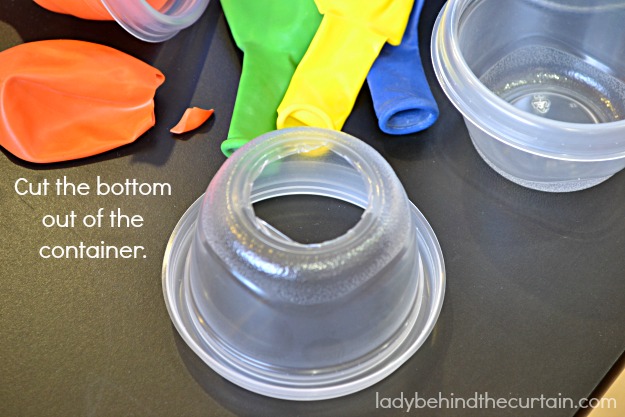
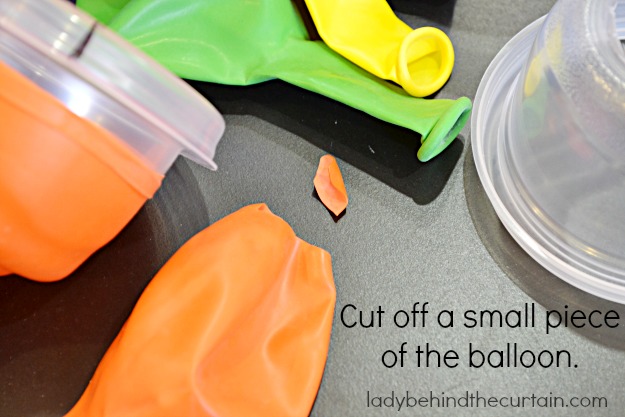
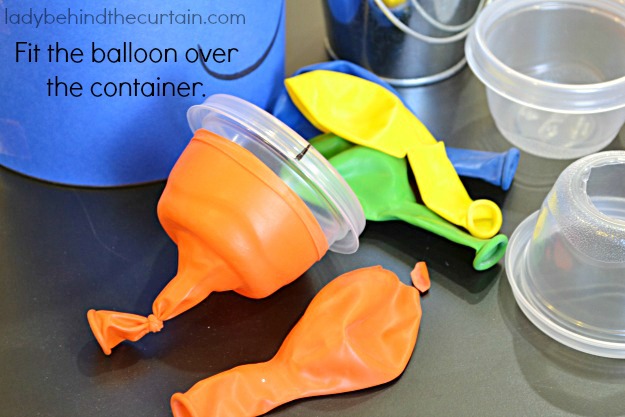
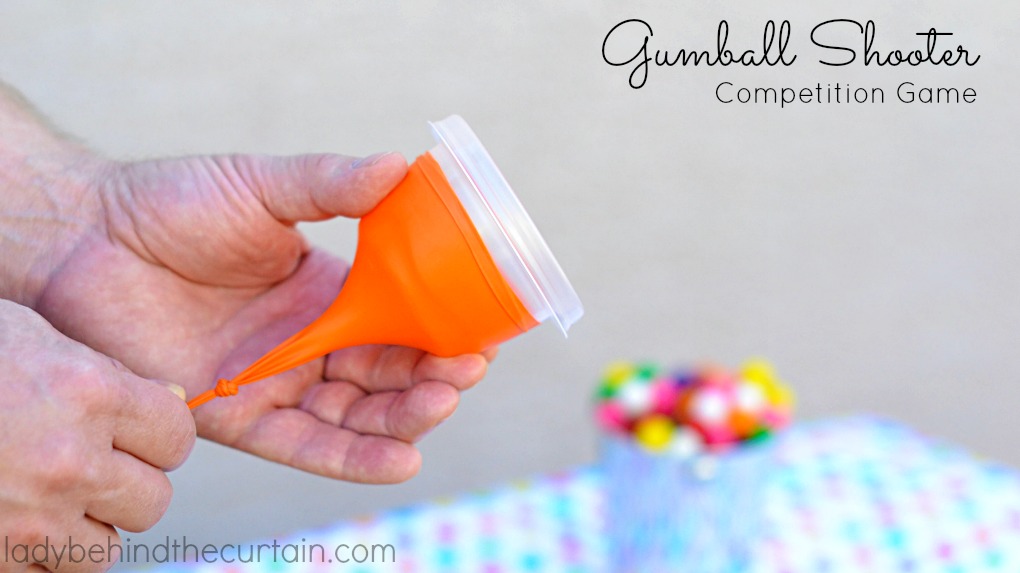
I chose to have the kids try to get the gumballs in a can. If that seems a little more challenging than you want, you can also make this a distance competition. On the other hand, if you want to make this even more challenging, have the kids use gumball-colored pom-poms. Here in Tucson, we have wind more days than we don’t. That’s why I chose to use gumballs. They are heavy and can sail against the wind. You can purchase bags of gumballs at the dollar store. GET ALL THE DETAILS HERE → GUMBALL SHOOTER COMPETITION GAME