





Lemon Buttercream Frosting
Bright, creamy, and unmistakably lemon, this Lemon Buttercream Frosting brings something to a cake or cupcake that vanilla buttercream simply cannot. Lemon has enough personality to become part of the dessert, not just a finishing touch, with a fresh citrus flavor that can make even a simple vanilla cupcake feel completely different.
Getting that lemon flavor into buttercream takes a little strategy. Fresh lemon juice sounds like the obvious answer, but adding enough juice to create bold lemon flavor can also soften the frosting. Lemon extract delivers concentrated flavor without affecting the consistency, while a small amount of fresh juice adds the tart brightness of real citrus.
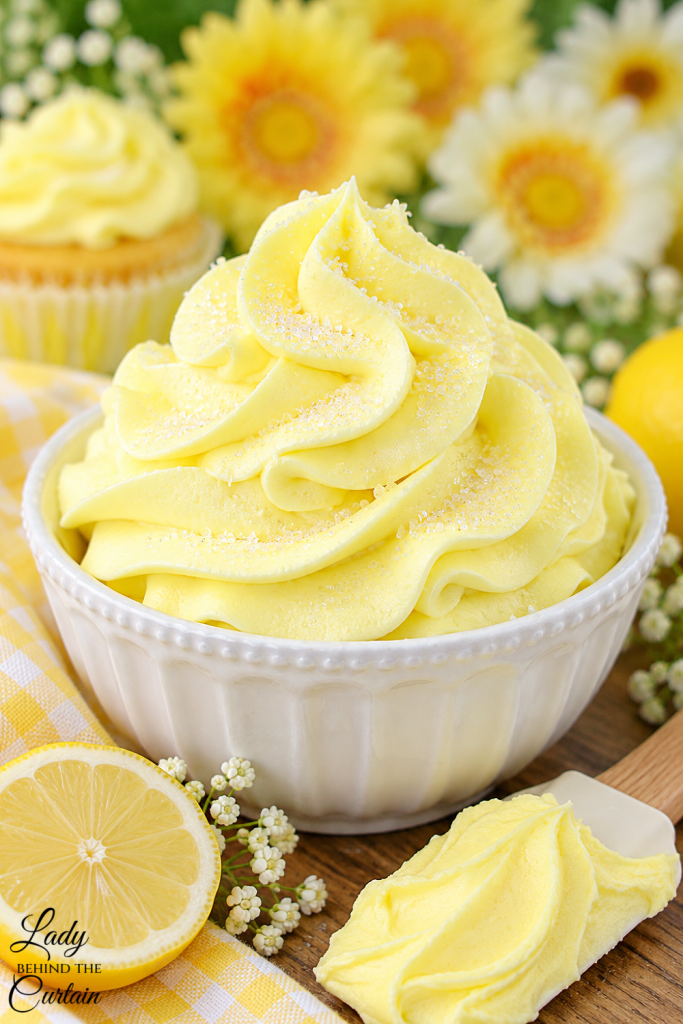
This buttercream uses both, along with vanilla, to soften the lemon’s sharper edges and salt to balance the sweetness. Butter and shortening work together to create a creamy frosting with enough structure for generous cupcake swirls, borders, rosettes, and cake decorating.
The recipe also makes a generous batch, about 5 cups of frosting, giving you enough for approximately 24 standard cupcakes with substantial piped swirls.
Bright Lemon Flavor Without a Soft, Runny Frosting
Fresh lemon juice and lemon extract may share the word lemon, but they behave very differently in buttercream. Understanding what each contributes is the easiest way to build noticeable citrus flavor while protecting the texture.
Fresh juice contains a large amount of water. Keep adding it to get a stronger lemon flavor, and eventually the frosting needs more powdered sugar to regain its structure. That extra sugar makes the buttercream sweeter and can actually work against the bright lemon flavor you were trying to create.
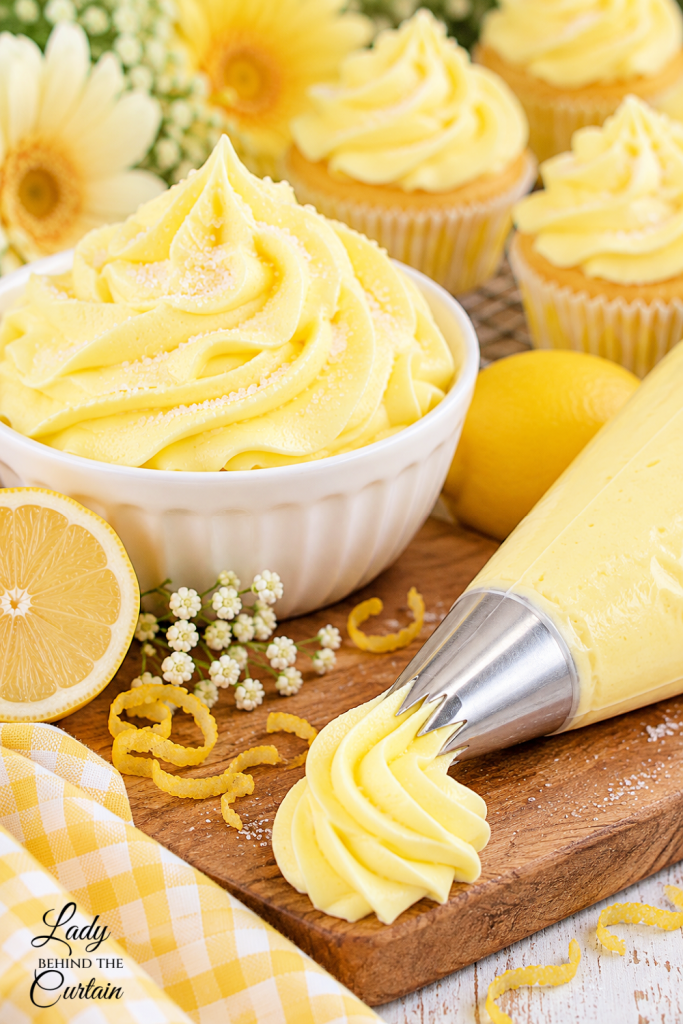
Lemon extract is much more concentrated. It provides plenty of lemon character with very little extra liquid, making it particularly useful in a frosting that needs to hold a decorative shape.
THE LEMON FLAVOR FORMULA
🍋 Lemon extract: concentrated citrus flavor
🍋 Fresh lemon juice: natural brightness and tartness
🌼 Vanilla: rounds out sharp citrus notes
🧂 Salt: balances the sweetness
🥛 Milk: fine-tunes the final consistency
Rather than asking lemon juice to do everything, each ingredient has a specific job. The result is a buttercream that can taste decidedly lemony without becoming thin or requiring extra cups of sugar to compensate.
Behind the Curtain Tip: If you ever want to strengthen the lemon flavor, think concentrated flavor rather than additional juice. It’s much easier to intensify flavor when you aren’t simultaneously changing the frosting’s liquid-to-sugar balance.
Wow! I Never Knew That… Much of what we recognize as lemon flavor actually comes from aroma. Aromatic compounds travel from the mouth to the nose as we eat, strongly shaping our perception of citrus. That’s one reason a concentrated lemon flavoring can make such a noticeable difference without adding the acidity or water found in additional lemon juice.
Butter and Shortening Make a Very Useful Team
An all-butter frosting has wonderful flavor, but butter responds quickly to temperature. It becomes firm when cold and considerably softer as it warms, which can make elaborately piped decorations more vulnerable on a warm day or on a dessert table.
Shortening brings additional stability. Combining it with butter preserves the creamy flavor and mouthfeel we expect from buttercream while creating a more forgiving frosting for decorating.
Another benefit of lemon frosting is its color. Butter naturally gives frosting an ivory or pale-yellow cast, while white shortening lightens the overall base. If you add yellow food coloring, use only enough to emphasize the lemon theme rather than overpower a deeply yellow buttercream.
| Butter Brings | Shortening Brings | Together They Create |
|---|---|---|
| Rich dairy flavor | Added stability | Balanced flavor and structure |
| Creamy mouthfeel | Lighter base color | Pretty pale frosting |
| Traditional buttercream character | Better shape retention | Defined piping |
This balance makes the frosting useful for both spreading and piping, rather than designing it for only one decorating technique.
Every Ingredient Has a Job
Powdered sugar does more than sweeten buttercream. It absorbs moisture from the other ingredients and provides much of the body necessary for piping and spreading.
That structural role is why seemingly small changes to a frosting recipe can have a noticeable effect. Fat, sugar, and liquid work as a system, and changing one affects the others.
| Ingredient | Main Purpose | Why It Matters |
|---|---|---|
| Unsalted butter | Flavor and creaminess | Gives classic buttercream richness |
| Shortening | Structure | Improves decorating stability |
| Lemon extract | Concentrated flavor | Adds lemon without excessive liquid |
| Fresh lemon juice | Brightness | Supplies fresh citrus acidity |
| Vanilla extract | Balance | Softens sharper citrus notes |
| Powdered sugar | Sweetness and structure | Builds the frosting’s body |
| Salt | Balance | Keeps sweetness from tasting flat |
| Milk | Consistency | Softens the finished frosting as needed |
| Yellow coloring | Appearance | Provides an optional visual flavor cue |
Adding the powdered sugar gradually helps it incorporate evenly into the fat and gives you a smoother buttercream. It also prevents a large portion of it from becoming a powdered-sugar cloud hovering over your kitchen.
From Mixing Bowl to Light, Fluffy Buttercream
Butter temperature strongly affects the finished frosting. Cold butter can leave small lumps and make mixing difficult. Butter that has become very warm or greasy can weaken the frosting before decorating even begins.
Softened butter should yield to gentle pressure while still holding its shape.
THE QUICK BUTTER CHECK
Too cold: Firm and difficult to indent
Ready: Easily indented but still holding its shape
Too warm: Shiny, greasy, or beginning to collapse
Once you incorporate all the ingredients, whipping gives the frosting a lighter texture and more volume. The air introduced during whipping turns a heavy sugar-and-fat mixture into the fluffy buttercream we want for cakes and cupcakes.
There is a limit, though. Excessive high-speed beating can trap large air pockets that later appear as holes in smooth frosting or gaps in piped decorations.
Behind the Curtain Tip: Once the frosting is light and fluffy, a brief final mix on low speed can help eliminate larger air pockets without sacrificing that lovely whipped texture.
Piping Consistency Is Something You See and Feel
The amount of milk needed in buttercream is better treated as a range than an absolute measurement. Humidity, ingredient temperature, and small differences in measuring powdered sugar can all affect how much liquid a batch needs.
That’s why you should judge the final consistency by what you plan to do with the frosting, not by whether you’ve used every tablespoon of milk listed in the recipe.
| Decorating Job | Best Consistency |
|---|---|
| Cake filling | Medium-firm |
| Sheet cake | Soft and easily spreadable |
| Cupcake swirls | Medium with defined ridges |
| Borders and rosettes | Medium-firm |
| Small piping details | Smooth but structured |
Before filling a piping bag, do a test swirl on parchment. It takes only a few seconds and lets you see whether the frosting releases easily while still holding the pattern the piping tip creates.
The Five-Point Piping Check
☐ A peak forms when the beater is lifted.
☐ The peak holds with a slight curl at the tip.
☐ A spatula moves through the frosting smoothly.
☐ Frosting passes through the piping tip without excessive pressure.
☐ Piped ridges remain clearly defined after a minute.
Those five observations are far more reliable than automatically adding the maximum amount of milk.
Pale Sunshine or Naturally Creamy
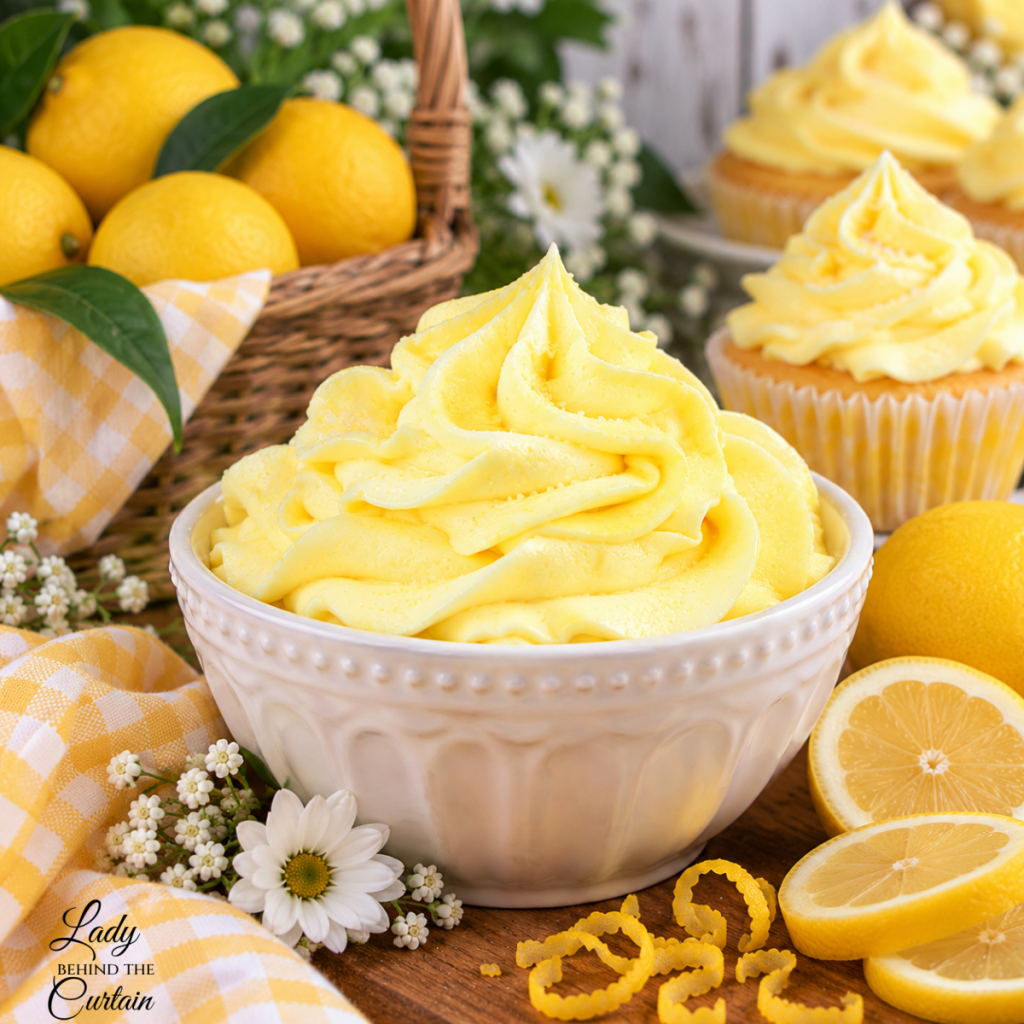
Yellow food coloring is completely optional. Butter already adds a subtle warm cast, so you can leave the frosting naturally creamy without muddying the flavor.
For cupcakes at a shower, spring party, birthday, or lemon-themed dessert table, pale yellow immediately signals lemon. Guests begin anticipating lemon before taking the first bite.
A few drops are usually enough. Soft buttery yellow looks natural and leaves room for berries, sprinkles, or other decorations to provide contrast.
Easy Finishing Ideas
- Thin curls of fresh lemon zest
- Candied lemon peel
- Fresh strawberries, blueberries, or raspberries
- White chocolate curls
- Yellow or white sanding sugar
- Small edible flowers
- Simple white and yellow sprinkles
Fresh lemon zest works especially well because the peel contains aromatic oils. A little zest on top can reinforce the lemon aroma without changing the frosting underneath.
Cakes, Cupcakes and Desserts That Love Lemon
Lemon buttercream is surprisingly versatile because citrus can reinforce another fruit flavor or provide contrast against something richer.
Vanilla and white cakes let the lemon shine, while lemon cake creates a more intense citrus dessert. Strawberry, raspberry, and blueberry cakes benefit from lemon’s brightness, especially when you incorporate fresh berries into the finished dessert.
White chocolate is another excellent partner. Its creamy sweetness benefits from citrus contrast, adding richness without making the dessert overwhelmingly sweet.
Build a Dessert Around the Buttercream
| Start With | Add Lemon Buttercream | Finish With |
|---|---|---|
| Vanilla cupcakes | Generous piped swirl | Lemon zest |
| Lemon cupcakes | Medium swirl | Candied lemon peel |
| Strawberry cake | Smooth frosting | Fresh strawberries |
| Blueberry cupcakes | Piped rosette | Fresh blueberries |
| Raspberry cake | Layer filling and frosting | Fresh raspberries |
| White chocolate cupcakes | Tall swirl | White chocolate curls |
| Sugar cookie bars | Thin frosting layer | Yellow sanding sugar |
| Coconut cake | Lemon frosting | Toasted coconut |
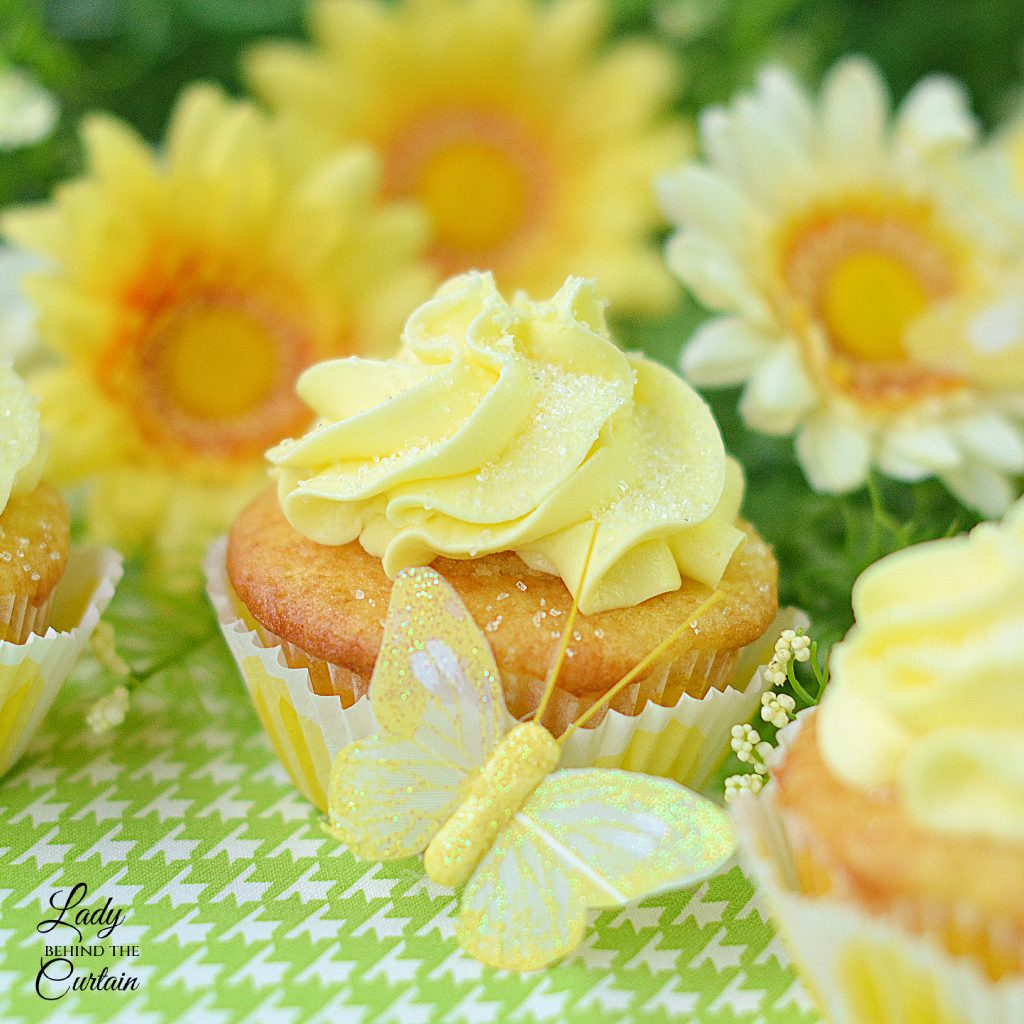
Lemon also works beautifully for spring and summer celebrations because it pairs naturally with fresh fruit, pastel colors, and floral decorations without tying the dessert to one particular holiday.
One Buttercream, Several Different Personalities
A useful frosting should work beyond one tray of cupcakes. This lemon buttercream can be spread over sugar cookie bars, sandwiched between soft cookies, used on mini cakes, layered with berry preserves in a cake, or piped onto cupcakes for a dessert table.
Change the finishing touches, and the same frosting takes on an entirely different personality.
For a spring garden party, keep the frosting pale and add berries with a few small edible flowers. For a lemonade-inspired dessert table, use yellow and white decorations and bring fresh lemons into the table styling.
A berry-lemon celebration can use strawberries, raspberries, or blueberries for color while keeping the frosting naturally creamy. For a more elegant shower cake, smooth the buttercream over the cake and use white decorations with a restrained amount of lemon zest.
This is where a versatile frosting earns its place in a recipe collection. You aren’t learning a frosting that works for only one dessert. You’re building a component that can change according to the cake, season, and occasion.
Planning Ahead Without Sacrificing Texture
Buttercream is an excellent make-ahead component. You can cover freshly prepared frosting while cakes and cupcakes finish cooling, and you can also refrigerate or freeze it when you want to spread a baking project over several days.
Refrigerated buttercream becomes firm because the butter hardens. Let it soften before rewhipping so you can judge the texture accurately. You can thaw frozen buttercream overnight in the refrigerator, then bring it closer to room temperature before whipping again.
Decorating-Day Game Plan
Before Mixing
☐ Soften the butter without melting it
☐ Prepare the fresh lemon juice
☐ Have powdered sugar ready
☐ Cool cakes and cupcakes completely
Before Decorating
☐ Taste for lemon intensity
☐ Check the buttercream temperature
☐ Adjust the final consistency only if necessary
☐ Add optional color gradually
☐ Pipe one test swirl
Before Serving
☐ Keep desserts away from direct heat and sunlight
☐ Add delicate fresh garnishes
☐ Allow chilled buttercream to soften for a creamier eating texture
For storage, keep the buttercream tightly covered. Fat can absorb surrounding refrigerator odors, and a delicate lemon frosting isn’t the place to discover what else was stored beside it.
If your finished dessert includes another component that requires refrigeration, such as a perishable filling, follow that ingredient’s storage requirements.
The Lemon Buttercream Rescue Guide
You can fix most buttercream problems once you identify what’s causing them. Check temperature first, because adding ingredients to fix a temperature problem can throw an otherwise balanced frosting off course.
| If the Frosting Is… | Likely Cause | Best Approach |
|---|---|---|
| Too stiff | Frosting may be cold | Let it soften and reevaluate |
| Too soft | Frosting may be warm | Cool briefly and test again |
| Weak in lemon flavor | Sweetness is overpowering citrus | Strengthen concentrated lemon flavor |
| Too tart | Fresh citrus is dominating | Let sweetness and vanilla provide balance |
| Grainy | Sugar isn’t fully incorporated | Continue mixing |
| Full of air bubbles | Excessive high-speed mixing | Finish briefly on low |
| Hard to pipe | Consistency is too firm | Adjust carefully with milk |
| Losing piping ridges | Frosting is too soft or warm | Cool and retest |
One of the easiest mistakes is adding milk to every stiff buttercream and powdered sugar to every soft buttercream. Sometimes the recipe doesn’t need any extra ingredients. It simply needs a temperature adjustment.
Sunshine in a Mixing Bowl
This Lemon Buttercream Frosting is designed around a simple idea: big lemon flavor shouldn’t require so much lemon juice that the frosting loses its structure. Concentrated lemon extract supplies the strength, while fresh juice contributes the bright citrus note that makes the flavor feel fresh.
The butter-and-shortening base gives you another useful balance. You get buttery richness along with enough stability for piping, while vanilla and salt quietly keep the lemon and sweetness in harmony.
It is also a generous batch. About 5 cups gives you enough for about 24 standard cupcakes with attractive piped swirls, or plenty to spread and decorate a cake without worrying that you’ll run out.
This isn’t vanilla buttercream with a hint of lemon. It’s a true lemon buttercream, with enough citrus character to become an important part of whatever dessert you pair it with.
Lemon has a wonderful way of making even a simple dessert feel fresh and cheerful. A vanilla cupcake, sugar cookie bar, or layer cake can take on a completely different personality with a big swirl of creamy lemon frosting.
That’s what I hope you’ll do with this buttercream. Pair it with berries, pile it onto cupcakes, spread it over a cake, or dress it up for a spring celebration. Keep the decorations simple or have fun with them because that bright lemon flavor can carry the dessert either way.
Most of all, make something you’re excited to put on the table and share. Those are always the desserts that seem to disappear first.
Sheryl
LATEST POSTS
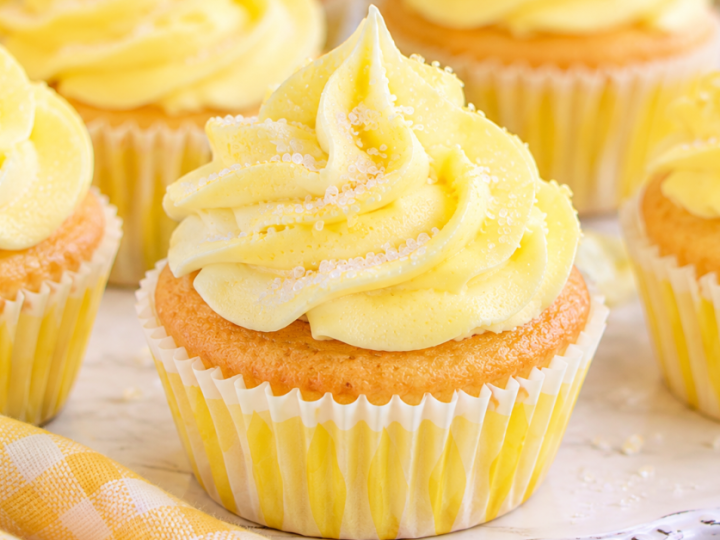
Lemon Buttercream Frosting
Ingredients
- ½ cup unsalted butter, softened
- ½ cup shortening
- 1 tablespoon lemon extract
- 1½ teaspoons vanilla extract
- 1 tablespoon fresh lemon juice
- 6 cups powdered sugar
- ⅛ teaspoon salt
- 3-5 tablespoons milk, as needed
- 4 drops yellow food coloring (optional)
Instructions
- Beat together the butter, shortening, lemon extract, vanilla extract, fresh lemon juice, and salt.
- Slowly add powdered sugar one cup at a time.
- Beat in up to 4 tablespoons of milk, 1 tablespoon at a time, until the frosting reaches a spreading consistency. Whip on high for 3 minutes or until the frosting is light and fluffy.

A Few Lemon Buttercream Details Worth Knowing
Once you’ve mastered basic buttercream, these smaller details can help when you adapt it for different desserts. They cover situations that don’t necessarily arise with every batch but are useful to know before you need them.
- Can I add lemon zest directly to the buttercream? Yes. Finely grated zest contributes aromatic citrus oils without adding much moisture. Keep the pieces very fine if you plan to use smaller piping tips, so zest strands don’t interfere with the opening.
- Can bottled lemon juice replace fresh lemon juice? It can work in a pinch, but bottled juice is processed for shelf stability and can taste different from freshly squeezed lemon juice. Since you only need a small amount, fresh juice is worth using when possible.
- Can I use this frosting under fondant? Yes. The butter-shortening mix provides a firm base once the frosted cake is chilled. Apply the buttercream smoothly because fondant tends to reveal bumps rather than hide them.
- Can I pipe flowers with this buttercream? Yes, although detailed petals generally benefit from a firmer consistency than ordinary cupcake swirls. Keep the flower portion firm, and soften only the frosting you need for other decorating jobs.
- Can I divide the frosting and tint only part of it? Absolutely. Leaving part creamy and tinting part yellow is an easy way to make two-tone cupcake swirls or contrasting cake borders without preparing two separate frostings.
- Can I use plant-based milk? A neutral, unsweetened variety can work as the consistency-adjusting liquid. Avoid strongly flavored varieties that could compete with the lemon.
- Can I use it for sandwich cookies? Yes. Keep the buttercream slightly firmer than cake frosting so it doesn’t squeeze out when you place the second cookie on top.
Those little adjustments allow one frosting recipe to move easily from a simple cupcake to a more elaborately decorated dessert.
Comments
Lemon Buttercream Frosting — No Comments
HTML tags allowed in your comment: <a href="" title=""> <abbr title=""> <acronym title=""> <b> <blockquote cite=""> <cite> <code> <del datetime=""> <em> <i> <q cite=""> <s> <strike> <strong>